



Top 10 Best RC Drones to Buy in 2026?
Choosing the right RC drone in 2026 requires more than chasing the highest camera resolution. Buyers also need stable controls, reliable batteries, durable frames, and accessible replacement parts. A beautiful specification sheet can hide weak performance in real conditions.
Alan Perlman, founder of UAV Coach and a respected drone educator, says, “The best drone is the one you can fly confidently and responsibly.” That principle guides this guide. Confidence comes from responsive controls, predictable hovering, clear instructions, and practice-friendly flight modes.
This selection examines ten leading RC drone models for different users and budgets. Some focus on aerial photography. Others suit beginners, outdoor explorers, or hobbyists who enjoy hands-on customization. We consider flight time, transmission range, camera quality, obstacle awareness, wind stability, charging systems, and repair support.
Small details matter. A controller that feels secure can prevent accidental input. A bright status light helps during late-afternoon flights. A removable battery may save a trip when one pack is still charging.
Real use is rarely perfect.
Wind changes. Batteries age. Apps occasionally fail. Even experienced pilots make poor choices. That is why responsible operation, local rules, privacy awareness, and safe open spaces remain essential. No feature replaces sound judgment.
This guide does not treat the most expensive RC drone as automatically superior. Instead, it compares practical strengths and honest limitations. The final choice should match your experience, flying environment, creative goals, and willingness to maintain the aircraft. Some rankings may invite disagreement, and that is reasonable. Technology changes quickly, while personal needs differ.
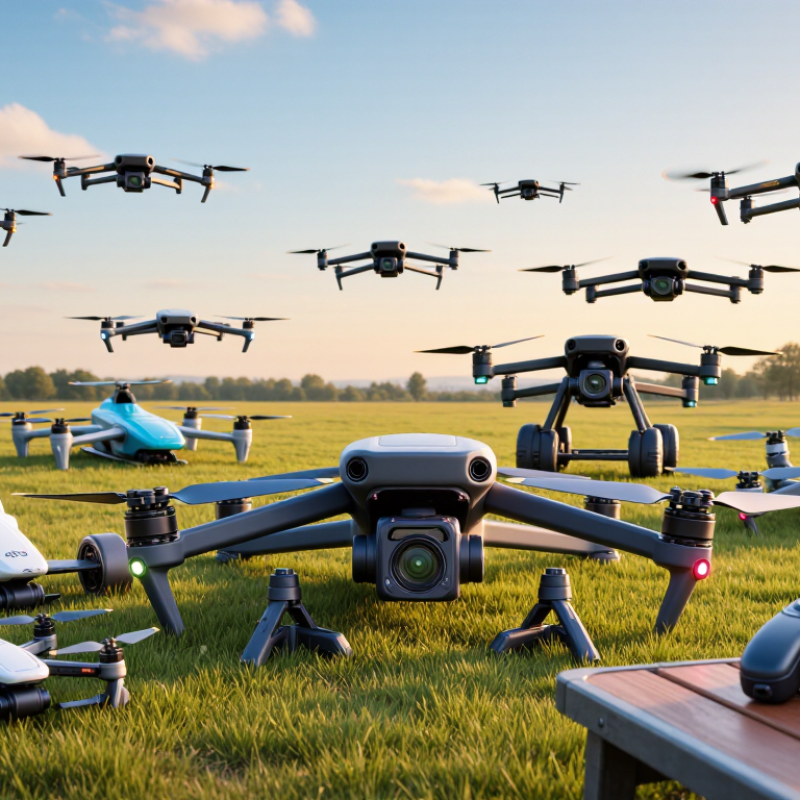
What Defines a High-Quality RC Drone in 2026
Top 10 Best RC Drones to Buy in 2026?
A high-quality RC drone should feel predictable, not merely powerful. Reliable flight control, responsive braking, and stable hovering matter more than impressive top speed. The Federal Aviation Administration reported over 865,000 registered drones in the United States by early 2024. That growth raises expectations for safer, clearer, and more dependable equipment.
Battery performance is another practical test. A drone claiming 30 minutes may deliver less in wind, cold weather, or repeated climbing. Look for removable batteries, clear low-power warnings, and honest flight-time testing. Drone Industry Insights’ 2024 market analysis projected strong commercial drone growth through 2030, increasing demand for durable systems and better service support. A useful camera should preserve detail during movement, not only in perfect sunlight. Obstacle sensing, return-to-home accuracy, encrypted connections, and privacy-conscious software also define quality. Specifications can still disappoint.
Tips: Test hovering in a wide, legal area. Check control response at different distances. Inspect propellers after every hard landing. Keep one spare battery. Do not trust the advertised flight time completely.
I also value repairability. Replaceable arms and accessible parts can extend a drone’s working life. The International Energy Agency’s 2024 battery analysis highlights continuing pressure on battery materials and manufacturing capacity. That makes efficient power use increasingly important. A quiet drone is helpful, too, especially near homes. My ranking would favor balanced performance over flashy features, though personal flying habits can change the result.
Top 10 Best RC Drones to Buy in 2026? – What Defines a High-Quality RC Drone in 2026
Brand-neutral comparison of widely available consumer drone profiles and their key buying factors
| Rank | Drone Profile | Best Use | Takeoff Weight | Maximum Flight Time | Maximum Transmission Range | Camera Capability | Obstacle Sensing | GPS / Return-to-Home | Foldable | Typical Price Range | Overall Rating |
|---|---|---|---|---|---|---|---|---|---|---|---|
| 1 | Compact Professional Camera Profile | Travel photography and advanced beginners | 249 g | 34 minutes | Up to 10 km | 1-inch-class sensor; 4K video up to 60 fps; HDR support | Omnidirectional | Yes | Yes | US$750–850 | 9.5/10 |
| 2 | Dual-Camera Long-Endurance Profile | Professional aerial photography and video | 724 g | 45 minutes | Up to 20 km | Wide camera plus 3x medium-tele camera; 4K video up to 120 fps | Omnidirectional with forward-facing low-light assistance | Yes | Yes | US$1,100–1,300 | 9.4/10 |
| 3 | Three-Camera Cinema Profile | High-end filmmaking and commercial production | 958 g | 43 minutes | Up to 15 km | Wide, medium-tele, and long-tele cameras; up to 5.1K video | Omnidirectional | Yes | Yes | US$2,000–2,300 | 9.3/10 |
| 4 | Ultralight Low-Light Profile | Night scenes and compact travel use | 249 g | 28 minutes | Up to 10 km | 1/1.28-inch-class sensor; 4K video up to 30 fps; wide aperture | Front, rear, and downward sensing | Yes | Yes | US$600–750 | 8.8/10 |
| 5 | Large-Sensor Endurance Profile | Landscape photography and long outdoor flights | 835 g | 40 minutes | Up to 12 km | 1-inch-class sensor; 5.4K video up to 30 fps; 4K up to 60 fps | Front, rear, and downward sensing | Yes | Yes | US$900–1,300 | 8.7/10 |
| 6 | Subject-Tracking Action Profile | Sports, cycling, and hands-free tracking | 800 g | 27 minutes | Up to 6 km | 1/2.3-inch-class sensor; 4K video up to 60 fps | Advanced multidirectional obstacle avoidance | Yes | No | US$900–1,100 | 8.6/10 |
| 7 | Enterprise Connectivity Profile | Mapping, inspection, and extended communications | 898 g | 32 minutes | Up to 9 km over supported networks | 48 MP camera; 4K HDR video; automated mapping support | Limited; pilot assistance is software-dependent | Yes | Yes | US$2,000–3,000 | 8.3/10 |
| 8 | Budget 4K GPS Profile | First-time pilots and casual aerial video | 249 g | 32 minutes | Up to 6 km | 1/3-inch-class sensor; 4K video up to 30 fps | No dedicated obstacle avoidance | Yes | Yes | US$350–450 | 8.2/10 |
| 9 | Immersive FPV Profile | First-person flight and high-speed action | 377 g | 23 minutes | Up to 13 km | 4K video up to 60 fps; wide-angle stabilized view | Basic downward and positioning assistance | Yes | No | US$900–1,000 | 8.1/10 |
| 10 | Palm-Sized Selfie Profile | Quick portraits, social content, and indoor practice | 135 g | 18 minutes | Up to 10 km with a compatible controller | 4K video up to 30 fps; electronic stabilization | No dedicated obstacle avoidance | Positioning support; GPS features depend on configuration | No | US$200–350 | 7.9/10 |
Related Posts
-
What Is the Best RC Drone for Beginners?
-
Why Choose RC Drones for Your Business Needs?
-

How to Choose the Best Home Security Drone for Your Property
-

Top 10 UAV Drones for Beginners: Best Features and Affordable Options
-
China Best Autonomous Drone Suppliers for Global Buyers?
-
How to Choose the Best Video Drone for Your Needs?