Buying a long range drone from China can reduce costs, but price should never lead the decision. China has a mature unmanned aerial vehicle manufacturing sector, with suppliers offering enterprise, surveying, inspection, and agricultural platforms. The difficult part is separating proven equipment from attractive online listings.
DJI founder Frank Wang once said, “The drone industry is still in its infancy.” That observation remains useful. Technology changes quickly, and a model with impressive specifications may still have weak software support or limited field testing. Buyers should examine flight endurance, transmission distance, payload capacity, wind resistance, battery cycle life, and spare-part availability. A printed specification sheet is not enough.
Look for manufacturers with traceable business registrations, documented test records, responsive engineers, and clear warranty terms. Request demonstration footage, but treat it carefully. A controlled factory flight does not represent a coastal inspection or a windy mountain operation. Ask whether the quoted range requires ideal conditions, unobstructed radio signals, or special equipment. It often does.
Authorized distributors can simplify customs documentation, training, repairs, and firmware support. Direct factory purchasing may offer better pricing, yet communication gaps can become expensive. Confirm import rules, radio-frequency requirements, insurance expectations, privacy duties, and local aviation regulations before payment. A long range drone must be operated only where permitted. Never assume that technical capability equals legal permission.
This guide will compare Chinese purchasing channels, supplier verification methods, essential specifications, and after-sales risks. It will also question common buying advice. Some recommendations sound practical but ignore maintenance, operator training, or total ownership costs. A reliable purchase begins with evidence, not marketing language.
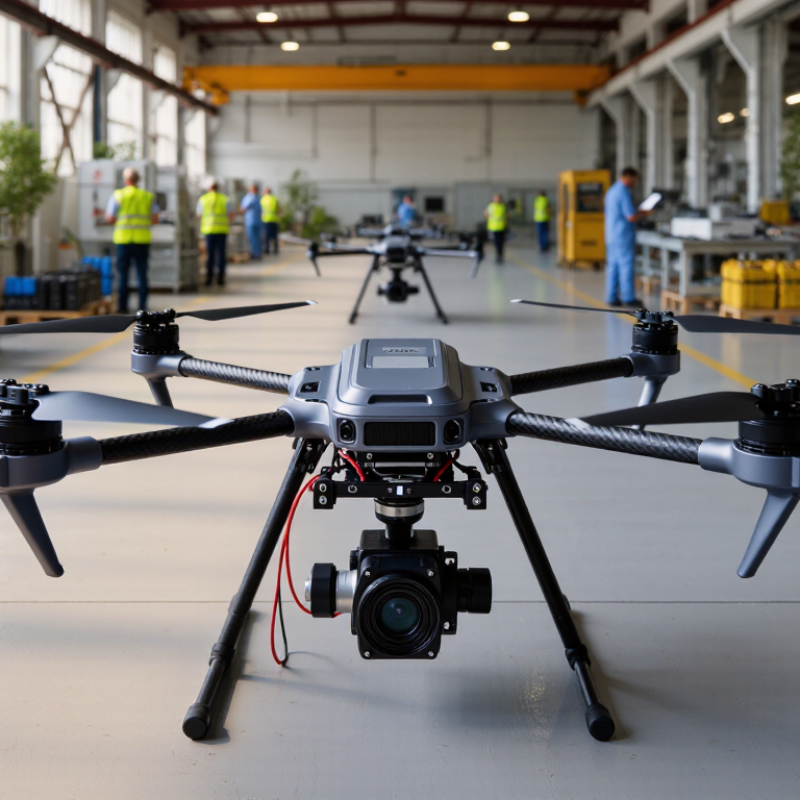
A long-range drone is defined by more than distance. It combines flight endurance, communication reliability, navigation accuracy, and payload capacity. In practical terms, many professional platforms support 30 to 90 minutes of flight and several kilometers of control range. The exact figure depends on terrain, weather, antenna design, and local operating rules.
The label remains imperfect. A longer signal is not always a better aircraft. For mapping farmland, buyers should examine flight stability, camera accuracy, and battery change time. For infrastructure inspection, obstacle sensing and return-to-home performance matter more. Emergency teams may value encrypted communication and dependable operation in weak-signal areas. These details are often overlooked.
The Federal Aviation Administration reported about 966,000 commercial drones in the United States during 2023, showing strong demand for professional aerial services. Its 2024 forecast expects the commercial fleet to exceed 1.18 million units by 2028.
Drone Industry Insights also estimates continued growth in commercial drone services, driven by surveying, inspection, logistics, and public safety. These figures suggest that intended use should guide procurement, not impressive range claims alone.
When sourcing from China, request test records, battery specifications, transmission details, repair procedures, and spare-part availability. Ask for measured performance in realistic conditions. Marketing numbers can look clean. Field conditions are not. A careful buyer should also verify data protection, operator training, and compliance requirements before purchase.
Chinese long-range drone suppliers generally fall into three groups: industrial-aircraft manufacturers, agricultural-platform makers, and engineering firms building customized systems. For mapping or inspection, ask for endurance under payload, not an empty-aircraft figure. A useful test is a 30-minute demonstration with the intended camera, battery, and return reserve.
The CAAC’s 2023 Civil Aviation Industry Development Statistical Bulletin reported about 1.27 million registered civil unmanned aircraft in China. That scale suggests a mature domestic ecosystem, but it does not verify any individual supplier’s quality. MarketsandMarkets estimated the global drone market at US$30.6 billion in 2022 and projected US$55.8 billion by 2030, reflecting demand across commercial applications.
Supplier documentation to request
Ask whether the quoted range assumes ideal conditions. Often, it does.
A factory audit or live acceptance test can reveal gaps that brochures miss. Confirm that the supplier can provide English manuals, maintenance training, and a clear warranty process. Some capable firms are small, and documentation may be uneven. That is worth checking early.
For cross-border purchases: Have qualified advisers review import, radio-frequency, and operating requirements in the destination market before placing an order.
When evaluating long-range drones from China, compare measured performance, not headline figures. A quoted range may assume a light payload, calm air, and a fresh battery. Ask for the test conditions, flight logs, and the remaining battery reserve at landing. Range is not one number. It changes with wind, temperature, route, and equipment weight.
Check payload capacity alongside flight time. A heavier camera or sensor can reduce endurance, so request figures for the exact configuration you plan to use. Communication deserves the same scrutiny. Ask about control-link frequency, expected range, antenna setup, and how the aircraft behaves if the signal weakens. Verify compatibility with your operating environment before purchase. It is tempting to compare advertised distances; that shortcut can mislead.
Safety features should be demonstrated, not just listed. Ask for details on low-battery alerts, return-to-home behavior, positioning support, and emergency procedures. Confirm what happens when positioning data becomes unreliable. Request a written configuration, warranty terms, spare-parts availability, and a practical acceptance test from the supplier. Small details matter. A clear test plan is useful, though it cannot predict every field condition. Look for specific answers and supporting documentation, not promises alone.
Before buying a long-range drone from China, identify the rules in your destination country. Requirements can vary by aircraft weight, radio equipment, intended use, and flight location. Check the national aviation authority’s rules for registration, pilot qualifications, operating limits, and any required remote-identification equipment. A product certificate does not automatically permit every flight.
Ask the supplier for documents tied to the exact model, not a similar-looking aircraft. Depending on the market, these may include radio-frequency test reports, electrical-safety documentation, or a declaration of conformity. CE marking is not a universal import permit, and US radio requirements differ. Check with your customs broker about the tariff classification, declared value, and paperwork needed at entry. Paperwork matters.
Battery shipping deserves a separate check. Request the lithium-battery UN 38.3 test summary and confirm the carrier’s packaging and transport requirements. Also verify that the advertised radio range matches local frequency rules and permitted operating conditions. I would not rely on a generic “international certificate”; a tidy document folder can still contain reports for another model. Rules change, and official guidance can be surprisingly hard to interpret, so confirm details with the relevant authorities before placing a large order.
| Buying or compliance area | What to verify | Documents or approvals to request | Buyer action |
|---|---|---|---|
| Chinese manufacturer or exporter | Confirm the legal seller, actual manufacturing source, aircraft configuration, flight-control system, radio modules, battery specifications, and export experience. | Business registration details, commercial invoice, packing list, product specification sheet, serial-number list, and written warranty and after-sales terms. | Match the quoted configuration to the tested sample and contract. Specify who handles export clearance, shipping, insurance, and customs documentation. |
| Export controls in China | Some unmanned aircraft and related equipment can be subject to Chinese export controls depending on technical parameters, end use, and end user. Not every long-range drone is automatically controlled. | Written export-control classification and, where required, the relevant export licence and supporting end-user or end-use documents. | Ask the exporter to confirm whether a licence is required for the exact model and destination. Do not rely on a general statement that the product is “exportable.” |
| Customs classification and landed cost | Import duty, taxes, restrictions, and paperwork depend on the destination’s tariff classification, product details, country of origin, and current rules. | Proposed HS code, country-of-origin information, invoice, packing list, transport documents, and any required import permit or customs declaration. | Confirm the classification and current duty rate with a customs broker or the destination customs authority before placing the order. Check the agreed Incoterms® and who pays import charges. |
| European Union | Check applicable EU product rules, including radio-equipment requirements, and whether the aircraft falls under the civil-drone product framework. Operational rules are separate from product conformity. | Applicable EU Declaration of Conformity, CE marking and technical documentation; radio testing evidence where relevant; class identification and user instructions where applicable. Battery transport documents may also be needed. | Verify the exact model and radio configuration against the applicable rules, including Regulation (EU) 2019/945 and radio-equipment requirements. Check operational conditions under Regulation (EU) 2019/947 with the relevant national aviation authority. |
| United States | Radio-frequency devices may require applicable FCC equipment authorization. FAA registration, Remote ID, pilot, and operating requirements depend on the aircraft and how it will be flown. | FCC authorization or other applicable compliance evidence for the radio configuration; product and origin documentation; battery shipping records; and any required aviation records for the intended operation. | Check current FCC and FAA requirements before import and use. Separately verify current customs duties and any applicable import restrictions for the specific product and parties involved. |
| United Kingdom | Check the product-marking and radio-equipment rules applicable in Great Britain or Northern Ireland, as relevant. Civil aviation registration and operating requirements are separate. | Applicable conformity documentation and markings, radio compliance evidence, instructions, commercial import documents, and any required aviation registration records. | Confirm current requirements with the relevant UK product-safety and aviation authorities. Do not assume that one marking or approval automatically covers every UK jurisdiction or operation. |
| Canada | Radio equipment may need to meet applicable ISED requirements. Transport Canada registration and pilot or operating rules depend on the drone and intended use. | Applicable radio-equipment compliance evidence, model and serial-number details, customs paperwork, and any required aviation registration or pilot documentation. | Check the exact radio module and aircraft configuration against current ISED and Transport Canada rules before purchase and flight. |
| Australia | Radio equipment may be subject to ACMA requirements. CASA registration, accreditation, and operating rules depend on aircraft weight, purpose, and flight category. | Applicable radio-compliance information, product and battery documents, import records, and any required CASA registration or operator documentation. | Confirm current ACMA and CASA requirements for the exact product and planned operation before shipment and use. |
| Lithium batteries and shipping | Lithium batteries are subject to dangerous-goods transport rules. Requirements can vary with battery type, watt-hour rating, packaging, and transport mode. | UN 38.3 test summary where applicable, battery safety data, accurate watt-hour ratings, and compliant dangerous-goods packaging and shipping documents. | Confirm that the carrier will accept the complete shipment, including spare batteries, and that the paperwork matches the batteries actually supplied. |
| Range, payload, and flight legality | Advertised radio range is not guaranteed flight range or legal authority to fly beyond visual line of sight. Actual performance depends on conditions, antenna setup, interference, payload, and local rules. | Test reports stating test conditions, payload and endurance data, radio-frequency specifications, failsafe details, and operating-manual limitations. | Ask for verifiable test conditions and conduct a controlled acceptance test. Obtain any required aviation authorization before BVLOS or other restricted operations. |
Where to Buy Long Range Drones from China?
How to Verify a Supplier and Complete a Purchase Safely?
A long-range drone purchase should begin with supplier verification, not price comparison. China’s business registration system can confirm a company’s legal name, registration status, and operating scope. Request the registration certificate, factory address, export history, and the name of the actual manufacturer. A polished website proves little. Ask for recent production photos, serial-number records, and a live video inspection. The details matter.
Technical claims need independent checking. Drone Industry Insights reported that the commercial drone market reached about 30 billion US dollars in 2023, increasing competition and exaggerated specifications. Treat advertised range as a laboratory figure. Request flight-test data, battery endurance at payload, wind resistance, control-link performance, and return-to-home behavior. A practical test should use your intended payload and local terrain. One short demonstration is not enough.
Use a written purchase contract with exact components, firmware versions, warranty terms, inspection rights, and delivery responsibilities. The International Chamber of Commerce notes that clear Incoterms reduce misunderstandings about transport, insurance, and customs duties. Pay through a traceable business channel, preferably with staged payments tied to inspection milestones. Check export documents before transfer. Also verify import, radio-frequency, privacy, and flight rules in the destination country. FAA’s 2024 forecast reported more than 850,000 registered drones in the United States, showing how closely aviation authorities monitor this sector. I would still hire a local compliance specialist. My earlier assumption that a large supplier is automatically safer was wrong. Evidence beats confidence.
These figures summarize key limits for the EU Open category: flights are generally limited to 120 metres above the closest point of the surface, and the aircraft must have a maximum take-off mass below 25 kg. Long-range operations may fall outside this category and require additional authorization. Confirm current rules with the relevant aviation authority before making any purchase or flight plans.