
UAV Fire Fighting: Transforming Emergency Response
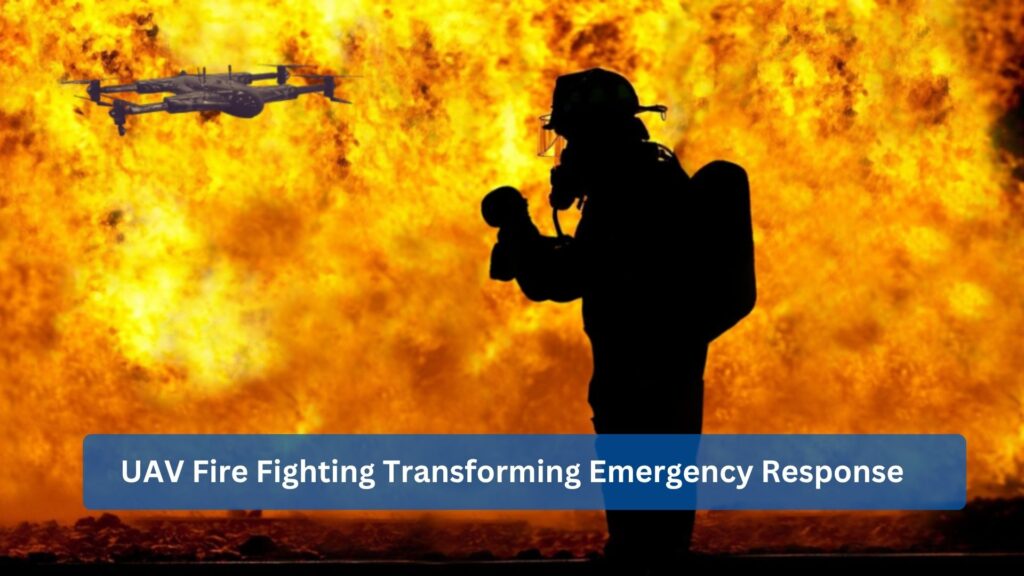
As the effects of climate change intensify and dry seasons grow longer, fire departments worldwide are adopting advanced technology to meet evolving challenges. Among the most impactful innovations is the use of UAV fire fighting systems. These unmanned aerial vehicles (UAVs) and autonomous drones are specifically designed for fire detection, prevention, and suppression. Today, drones in fire fighting are becoming essential tools for modern fire departments, emergency response agencies, and disaster management teams.
By providing real-time aerial surveillance, accessing hazardous zones, and even deploying fire suppressants, UAV fire fighting solutions are transforming how fire operations are conducted. Their growing integration with artificial intelligence (AI), thermal imaging, and machine learning is dramatically improving the speed, accuracy, and safety of emergency response. As the demand for faster, safer, and more cost-effective fire fighting continues to rise, autonomous drones in firefighting are leading the way into a new era of disaster response.
The Rise of UAV Fire Fighting in Modern Fire Safety
What Is UAV Fire Fighting and How Does It Work? Unmanned Aerial Vehicles (UAVs), are remotely operated or autonomous aerial systems designed to carry sensors, cameras, and specialized fire fighting tools. Fire fighting drones gives real-time data and operational support, greatly improving the situational awareness and effectiveness of fire response teams.
The three main types of Drones used in fire operations include:
- Fixed wing Drones: Ideal for wide range surveillance and monitoring large wildfire prone areas.
- Multirotor drones: Highly manage and suited for close range inspections in urban and structural fires.
- Hybrid Drones: Combine long endurance with multirotor agility, making them versatile for varied mission types.
To enhance fire response, UAVs are equipped with advanced technologies such as:
- Thermal imaging: Identifies heat signatures, hotspots, and active flame fronts.
- LiDAR: Maps terrain and vegetation to assess fire spread risks.
- AI-driven analytics: Helped automated fire detection, pattern recognition, and predictive fire behavior modeling.
How UAVs Help in Fire Prevention and Early Fire Detection
Fire prevention is a crucial yet often underfunded part of emergency response. UAVs provide an efficient and cost-effective way to identify and mitigate fire risks. Drones for wildfire prevention are deployed to:
- Patrol high-risk areas: UAVs scan forests, grasslands, and utility corridors for signs of smoldering vegetation or unauthorized fire activity.
- Monitor power infrastructure: Thermal sensors detect overheated transmission lines or faulty equipment that could ignite wildfires.
- Survey land conditions: Drones analyze dryness levels, vegetation overgrowth, and illegal debris dumping that could contribute to fire hazards.
Using UAVs for prevention allows agencies to act on early warnings and carry out targeted mitigation strategies, such as controlled burns or vegetation clearing.
How UAVs Improve Fire Suppression Operations
When fires break out, quick and informed decision-making is critical. Drones improve fire suppression operations by:
- Providing real-time aerial surveillance: Command centers receive live feeds and thermal overlays, improving situational awareness.
- Guiding fire fighting units: Drones create up-to-date maps, identifying access routes, firebreaks, and safe zones.
- Delivering suppression agents: Some UAVs, including the Zenadrone 1000, are designed to carry fire retardants or water payloads, particularly in hard-to-reach areas.
- Coordinating multi-agency response: Drones relay data to fire crews, police, EMS, and disaster response teams, enabling unified command efforts.
In both wildland and structural fires, UAVs provide a force-multiplier effect, improving visibility, communication, and coordination.
How AI-Powered Drones Detect and Fight Fires
The Role of AI in Fire Detection? AI plays a transformative role in enhancing the capabilities of AI-powered fire drones. Using onboard processors and cloud computing, UAVs leverage machine learning algorithms to:
- Detect early fire signs: Analyze thermal anomalies, smoke behavior, and even changes in gas composition.
- Predict fire spread: AI models simulate fire movement based on topography, wind, temperature, and humidity.
- Classify fire types: Distinguish between structural, electrical, and wildland fires, allowing for optimized response tactics.
Real-world implementations include projects like the Fire Watch program in Germany, which integrates AI with drone data to identify and classify smoke within seconds, much faster than traditional methods.
The Role of Autonomous Drones in Fire Suppression
Autonomous drones in fire fighting operate with minimal human intervention. These drones:
- Execute pre-programmed flight plans: Based on AI assessments, they target fire hotspots and deploy fire suppressants precisely.
- Make autonomous decisions: Choose optimal angles of approach, adjust flight paths in real-time, and evaluate fire intensity.
- Communicate with other drones: Share data and create a collaborative network for maximum area coverage.
Autonomy enhances efficiency, but it also presents technical challenges:
- Real-time AI processing requires significant computational power and seamless data transmission.
- Obstacle avoidance must be flawless in complex terrains.
- Strict adherence to regulations is essential, especially when drones are flown outside the operator’s direct line of sight
Still, the benefits outweigh the hurdles, especially in scenarios where speed and precision can save lives.
Pros and Cons of UAV Fire Fighting
Advantages of Using Autonomous Drones in Fire fighting? Deploying fighting drones offers numerous operational advantages:
- Rapid deployment: UAVs can be launched within minutes of an alert, reducing response times.
- Risk mitigation: Drones operate in dangerous zones, such as dense smoke, collapsing structures, or volatile terrain, where humans cannot safely go.
- Cost-effective operations: Compared to helicopters or manned aircraft, UAVs require less maintenance and operational expense.
- Enhanced decision-making: AI-powered analytics interpret data and offer strategic insights, improving suppression outcomes.
- Scalability: Fleets can be deployed for large-scale operations or smaller incidents with equal effectiveness.
Drone Fire departments have reported improved perimeter control and containment speed in wildfire zones using drone reconnaissance and suppressant delivery.
Limitations and Challenges of UAV Fire Fighting? Despite their strengths, autonomous UAV Fire Fighting face several constraints:
- Regulatory restrictions: FAA and equivalent agencies often prohibit autonomous drone operation in emergency airspace without special waivers.
- Limited endurance: Battery-powered drones typically fly for 20 to 45 minutes, restricting mission duration.
- Environmental limitations: Strong winds, heavy smoke, and rain can compromise drone performance and sensor accuracy.
- Data security and ethics: Storing and processing real-time video and AI decisions raise privacy and ethical concerns, especially when drones operate in residential or public areas.
- Dependency on communication infrastructure: Autonomous systems rely on robust networks for real-time processing, which may not be available in remote fire zones.
These challenges must be addressed for broader adoption through improved battery technologies, clearer regulations, and ethical AI frameworks.
Future Trends in Drone-Based Fire Response
Advancements in AI and Machine Learning for UAV Fire Fighting? AI’s evolution will enable smarter fire fighting UAV technology. Upcoming innovations include:
- Real-time analytics: AI models will instantly process live drone feeds to provide actionable strategies.
- Predictive wildfire modeling: AI will use big data such as weather patterns, fuel maps, and historical fire behavior to forecast fire development.
- Adaptive learning: Systems will learn from past missions to continuously improve performance.
Such tools will enable fire agencies to respond to fires and prevent them with unparalleled precision.
The Development of Swarm Drone Technology for Fire Fighting
One of the most promising future technologies is the development of swarm UAV for fire fighting, which includes multiple UAVs operating as a coordinated unit. Benefits of swarm technology include:
- Area coverage: Drones divide and conquer, covering more territory than a single UAV.
- Dynamic suppression: While one group collects data, others deploy suppressants simultaneously.
- Resilience: If one drone fails, the swarm compensates, ensuring mission continuity.
Ongoing research in swarm AI and decentralized decision-making could soon make these fleets viable in large-scale wildfire scenarios.
Integration with Smart City and IoT Systems for Fire Response
Urban fire response is also set to transform through integration with smart technologies:
- Sensor networks: IoT sensors detect temperature spikes or smoke and trigger automatic UAV deployment.
- Real-time coordination: Drones sync with city traffic systems to assist evacuation and guide emergency vehicles.
- Cloud-based command centers: Seamless communication between drones, first responders, and hospitals speeds up rescue and triage.
Emergency response drones will be embedded within citywide infrastructure, providing always-on fire surveillance and rapid intervention capabilities.
Conclusion: The Future of UAV Fire Fighting
The rapid advancement of UAV fire fighting technologies marks a pivotal shift in managing fire emergencies. From early fire detection and risk assessment to active suppression and real-time coordination, UAV Fire Fighting are proving indispensable. With the integration of AI, drone-based fire suppression is becoming more efficient, safer, and cost-effective. Developing swarm drones, predictive analytics, and smart city connectivity further enhances the future outlook.
As agencies and governments continue to adapt to these innovations, the potential for fully autonomous fire response systems becomes increasingly tangible. However, realizing this future requires overcoming regulatory, technical, and ethical challenges. Through collaboration, investment, and responsible deployment, autonomous UAV Fire Fighting will be central and beneficial to saving lives, protecting communities, and preserving natural ecosystems.
Contact Us

Thank you for your message. It has been sent.
Latest Posts


Difference Between GNSS and GPS
Social Profiles