
What Are drones for fire and rescue and How Do They Work?
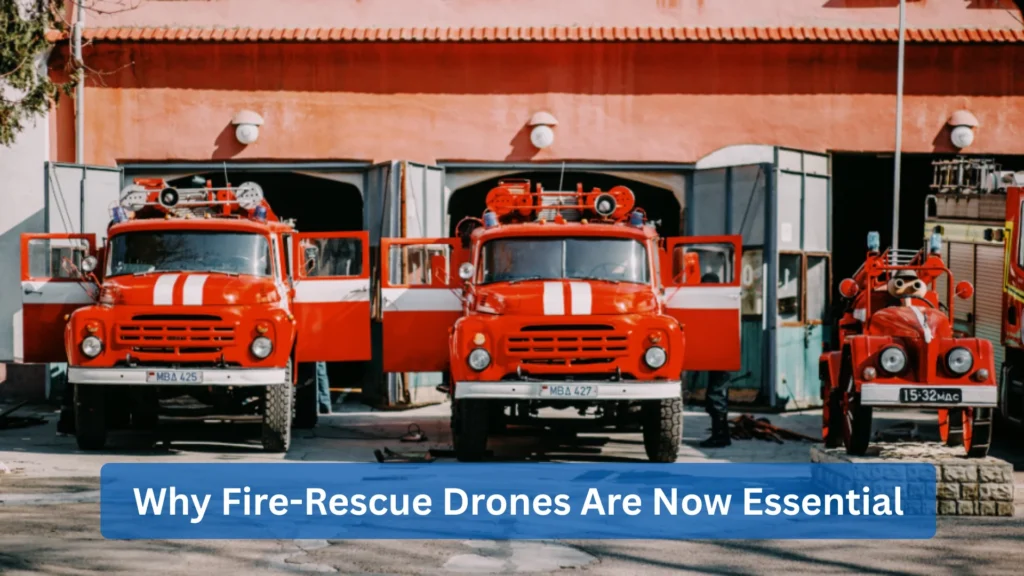
Nowadays, emergency responders have to work in extreme conditions, under the threat of rapid movement, and make decisions within seconds. Drones for fire and rescue meet this need. These air systems collect real-time information, stream updates, and provide high-risk responders with assistance in the air. The drones are flying scouts; instead of throwing crews into burning buildings or far-off areas of disaster, the drones are the ones that direct every move of the team.
What Are Drones for Fire and Rescue
In simple terms, drones for fire and rescue are unmanned aerial vehicles that support firefighters and emergency teams with visual, thermal, and logistical help during operations. These machines are constructed to withstand extreme environments such as heat, smoke, poor visibility, as well as irregular terrain, unlike consumer drones. This makes them useful in both structural and large-scale disaster responses.
How They Collect and Transmit Data
The greatest strength of firefighting drones is their ability to gather information faster than humans on foot. The aircraft have cameras and sensors that capture thermal data, visible light images, environmental data, etc. This data is immediately transmitted to them on the ground using secure live-streaming connections. With such a real-time perspective, decisions that would have taken minutes to make or even hours would be made within seconds.
Flight Capabilities
Modern public safety drones can navigate where humans cannot tight rooftop angles, unstable bridge structures, cliff sides, smoke-filled streets, and wildfire fronts. They usually feature:
- GPS stabilization of hovering in place.
- Long-distance communication connections.
- Obstacle awareness systems are automated.
- Long-range endurance flight batteries.
- Rapid deployment and agility
- Urgent deployment
- Rapid deployment and agility
These features make the emergency teams acquire eyes on the situation fast even under the conditions of ground access blockage or hazard.
Payload Types
The actual innovation is the cargo of the aircraft. Payloads convert a drone into a flying camera into a multi-sensor response mechanism. Typical modules include:
- Thermal cameras which display heat signatures.
- Air quality analysis sensors.
- Structural assessment cameras of high definition.
- Guiding civilians with loudspeakers.
- Low-light monitoring searchlights.
Interchangeable mounts in some advanced units can even be used to enable teams to change tools within minutes depending on the mission requirements. What is obtained is a dependable aerial resource that is responsive to almost any fire or emergency scenario.
Why Are Fire and Rescue Drones Becoming Essential for Emergency Teams?
Traditional firefighting and rescue tactics are often ineffective as emergencies become increasingly complex. Fire and rescue drones fill critical gaps that can only be achieved through speed, safety and intelligence by ground crew.
Speed and Accessibility
Situation awareness is crucial in emergency situations. Emergency response drones can arrive at the scene of an incident within minutes and provide a live aerial view of the location before teams arrive. In the case of high-rise fires, chemical spills, or rough wildfire areas, drones maneuver through obstacles more rapidly than cars or foot patrols, ensuring timely evaluation and prompt decision-making.
Reduced Human Risk
One of the biggest benefits of UAVs for fire departments is safety. With drones, the firefighters need not risk their lives to access dangerous areas such as smoke-filled rooms, unstable rooftops, or areas of chemical spills. Drones reduce the risk of injuries by identifying hotspots, structural instabilities or toxic spills up high, and help the responders to strategize to avoid causing injuries to others.
Greater Visibility in Difficult Environments
Human sightlines can be restricted by thick smoke, darkness or hindrances on the terrain. Fire and rescue drones equipped with thermal and infrared sensors have provided them with a bird’s-eye view, revealing concealed threats. Emergency teams will be able to identify people trapped, track the movement of smoke, and monitor the fire’s development in real-time.
Cost-Effectiveness
The cost of deploying drones can be significantly lower than that of helicopters or extensive ground surveys. Although the initial acquisition and training are costly, fire and rescue drones are a cost-effective solution because they mitigate the risk of manpower, minimize property damage, and optimize resource allocation. Fewer assets can be used to accomplish more by smaller teams, and the idea of integrating the drones is a brilliant long-term plan for municipal and volunteer fire departments alike.
Where Are Drones for Fire and Rescue Used in Urban Firefighting Operations?
The fires in cities are special: narrow streets, high-rise buildings, congested populations. Drones for fire and rescue act as vital extensions of urban fire teams, mitigating risks while boosting operational efficiency.
Building Fire Assessment
Before crews enter a burning structure, urban firefighting drones provide detailed thermal scans and high‑resolution images of interior and exterior damage. Such tests can provide information about hotspots, structural vulnerabilities and smoke patterns and make decisions concerning safe entry points and evacuation priorities.
Roof Inspections
Rooftops can be considered to be the most difficult to review safely. Fire scene monitoring drones hover above, checking for weakened beams, fire spread, or trapped occupants. Live visual information will enable ground crews to use ladders or ventilation strategies in a safer and more precise way.
Victim Detection with Thermal Cameras
Urban settings are overcrowded and finding people can be difficult. Drones for fire and rescue equipped with thermal imaging locate victims through smoke or debris, speeding rescue operations and increasing survival rates.
Smoke Tracking
Drones assist in forecasting the direction of the fire and notify people living in the vicinity of the fire by tracking smoke columns. Such visual intelligence can be used in evacuation planning and prioritization of firefighting operations.
Traffic and Evacuation Support
In addition to monitoring fires, fire scene monitoring drones observe surrounding traffic, ensuring clear paths for emergency vehicles and assisting in crowd control during large‑scale urban incidents.

How Do firefighting drones Support Forest and Wildfire Response
Wildfires propagate rapidly and uncontrollably, often in remote or inaccessible areas. Firefighting drones provide a strategic advantage by delivering real-time intelligence, enabling teams to respond efficiently while keeping humans out of harm’s way.
Long-Range Fire Spread Mapping
Drones for wildfire are able to fly over large distances, surveying the fire lines using GPS and thermal imaging. The information allows incident commanders to focus on containment and use resources effectively.
Hotspot Detection
It is important to detect extreme heat so that flare-ups can be avoided. Thermal imaging drones spot invisible hotspots, allowing firefighters to focus on critical zones before fires reignite or breach containment lines.
Aerial Surveillance in Remote Zones
The thick forests, hills and rocky terrain make it hard to monitor the old ways. Firefighting drones fly over these areas, offering continuous aerial views without risking personnel. Live feeds enable teams to make changes according to the changing conditions.
Night Fire Monitoring
Fires don’t stop at dusk. Infrared cameras mounted on drones for wildfires enable them to see at night, allowing teams to monitor fire behavior, identify smoke columns, and track the fire’s spread, even during dark hours, with the help of wind.
Fire Behavior Prediction
State-of-the-art drones combine the gathered data with predictive models to predict the movement of the fire under the influence of wind, vegetation and terrain. These forecasts contribute to proactive combating, evacuation and mitigation of risk in the long term.
How Are Drones Used in HazMat Emergency Operations?
Chemical leakage, gas leakage and hazardous material incidents require utmost care. Emergency response drones enable the responders to investigate the location without risking their lives and collect important data on the environment.
Chemical Leak Detection
Drones are equipped with special chemical sensors that allow them to detect toxic gases or volatile substances at a safe distance, as well as the early identification of the substance without risking the lives of staff.
Gas Sensors and Air-Quality Analysis
Public safety drones equipped with air-quality sensors are used by authorities to monitor air quality in real-time, enabling them to evacuate a specific area and dictate the type of protective equipment ground teams should wear.
Safe Remote Inspection
The HazMat areas frequently restrict human access over an extended period of time; therefore, drones offer constant oversight of the area at a distance, minimizing risk, but maintaining situational awareness.
Hazardous Spill Documentation
High definition cameras record the extent and progression of the spill, creating a precise report on the spill, insurance and post-incident analysis. Such images are also used to simplify communication with response forces and officials.
What Tools and Technologies Make Firefighting Drones Effective?
The current drones are a combination of software and hardware that can provide actionable information in an emergency.
Thermal and Infrared Cameras
Thermal imaging drones reveal heat behind walls, under rubble, or through smoke. These sensors assist in the search of victims, the movement of fire, and the hotspots.
HD Live Video
The high-definition cameras provide real-time images to the command centers allowing quick and effective decision-making and coordination of multi-units throughout the scene.
Gas Detection Sensors
The harmful gases and air contaminants are sensed by drones in emergency services and this provides the teams with a tool to be able to monitor the toxic hazards without being exposed to them.
Mapping Software
State-of-the-art software then converts drone data into usable maps and models, which are essential in the planning of evacuation routes, monitoring fire spread, and recording the damage in the future.
Water/Foam Payload (Specialized Models)
There are drones that have small water or foam payloads to be used to suppress small fires or hotspots. Although they are not used to replace ground crews, they provide an instantaneous response to remote locations.
How Do Search and Rescue Drones Help Locate Victims Faster?
Every second matters in cases of emergencies which are time-sensitive. Search and rescue drones sharpen teams’ ability to locate victims swiftly, even under challenging conditions.
Infrared Imaging for Missing Persons
Thermal cameras allow search and rescue drones to use human heat signatures in vegetation, smoke, or debris to speed up the identification of victims during natural disasters, collapsed buildings, or fire areas where visibility is low.
Night-Time Visibility
Working at night is dangerous. Thermal imaging drones illuminate heat patterns invisible to the naked eye, letting rescue teams proceed safely after dark.
Tracking Movement Through Smoke
Heavy smokes conceal victims on the ground. Drones fly overhead and follow movement providing the locations of teams on the ground. By doing so the responders are able to predict the direction the victims move and be able to reach them quicker.
Guiding Rescue Teams
Public safety drones provide dynamic situational awareness, guiding personnel with visual or GPS markers toward individuals in need. This coordination reduces wastage of time and increases the success of the rescue.
How Does the ZenaDrone 1000 Support Fire and Rescue Missions?
ZenaDrone 1000 is a high-tech system that is designed to support high-risk emergencies. It is a combination of multiple technologies that enhance operational efficiency and safeguard responders.
Thermal Imaging Capabilities for Hotspot Identification
The ZenaDrone 1000 has high-resolution thermal cameras capable of identifying hotspots within a fire early and notifying the teams about the most dangerous zones prior to their arrival.
AI-Powered Mapping for Wildfires and Structural Fires
Its AI-based software generates live maps of burning buildings, destroyed buildings, and hazards around them. Respondent planners are able to plan more effectively and forecast fire behavior.
Long Flight Endurance for Large-Area Assessments
The ZenaDrone 1000 has a long battery life and efficient flight systems, which means that the drone can cover a large area in the city or forest before needing to return to charge the battery, making the drone continuously monitored.
Payload Support for Communication, Sensors, and Rescue Gear
Air-quality sensors, loudspeakers, a first-aid kit, and other important equipment can be attached to the drone as modular payloads, which allow it to deliver intelligence and logistical assistance during a single flight.
Real-Time Video and Cloud Data for Command Centers
Cloud integration and live video feeds provide incident commanders with the ability to oversee operations remotely, coordinate teams in real time and record them to facilitate after-action analysis.
How ZenaDrone 1000 Improves Firefighter Safety
In performing its duties of high-risk reconnaissance, locating hotspots, and identifying victims, the drone exposes the personnel to less risk and allows the firefighters to operate more confidently.
Use Cases
- Remote forest control of wildfires.
- Fire surveillance of buildings and cities.
- HazMat zone assessments.
- Quick rescue operations in smoke-filled or blocked places.
What Are the Key Benefits of Using Drones in Fire and Rescue Operations?
The introduction of drones into emergency processes changes the rate, security, and precision of emergency operations.
Faster Scene Awareness
Emergency response drones offer an immediate overview, letting teams grasp complex situations instantly. Fast intelligence saves lives and minimizes response time.
Increased Firefighter Safety
Drones would eliminate injuries and exposure to toxic environments by ensuring that personnel are not close to hazards by observing them remotely.
Accurate Emergency Decision-Making
By having thermal, visual and sensor data, there is informed decision-making by commanders and resources are deployed efficiently and effectively.
Real-Time Coordination
Fire scene monitoring drones used to monitor fire scenes provide real-time data to various teams simultaneously, enhancing and streamlining communication, coordinating efforts, and addressing the results.
What Challenges Limit the Use of Fire and Rescue Drones Today?
Although fire and rescue drones have their benefits, the introduction of these technologies into the emergency workflow is fraught with a number of challenges.
Weather Limitations
Strong winds, heavy rain, and smoke may seriously influence the work of drones. Such conditions decrease the stability of the flight, affect sensor accuracy, and even prevent the functioning of fire and rescue drones. During emergencies, the small size of windows caused by weather may postpone the assessment and make it difficult to respond.
Even the latest drones are not resistant to extreme conditions. Weather forecasts are to be taken into account by fire departments and contingency plans should be provided, i.e., multiple units should be deployed or wait until conditions are safer to prevent the lack of coverage.
Battery Endurance
One of the limitations is flight duration. The duration of a battery cycle per flight of most fire and rescue drones is 20-50 minutes, and might be insufficient in case of long-term incidents or extensive surveillance. This demands thorough planning of the mission in order to eliminate any gaps in coverage.
To beat this, several drones or simple battery-change processes are commonly utilized in teams. As battery technology advances, the operations strategy should consider the endurance limits to ensure successful continuous support in the air.
Regulations (FAA, Local Laws)
The airspace regulations, drone certification, and local privacy regulations are a great challenge. UAVs for fire department must comply with different regulations in different regions. The lack of compliance may result in fines, limitations of operations, or delays in the drone integration.
Technology can be slowed down by regulatory hurdles. In live fire or rescue situations that require the use of drones, departments should keep up with the changing laws, obtain permits and train operators to attain compliance before implementation, complicating the planning process.
Cost and Training Requirements
Buying drones with sophisticated sensors, high-resolution cameras, and payloads is highly expensive. Continuous expenses, including maintenance, software license, sensor upgrades, and harm budgets.
Training is also very important. The teams are required to learn how to fly fire and rescue drones safely as well as how to interpret thermal data, mapping data, and sensor data. Drones cannot achieve their full potential of saving lives without being properly trained.
What Is the Future of Drones in Emergency Services and Firefighting?
The future drone generation is expected to have revolutionary potential in emergency response.
Autonomous Firefighting Drones
New units will be able to work separately and survey fires and deliver resources with minimal human involvement, and this will enhance coverage and efficiency.
AI-Powered Fire Prediction
The sophisticated AI algorithms might anticipate the fire propagation and dynamics and inform the evacuation and suppression plans before the flames are critical enough to occupy the most crucial areas.
Drone Swarms for Wildfires
Cooperating drone swarms would be able to scan large wildfires, reconstruct at the same time, and deploy fire-suppressing payloads simultaneously.
Integration with Command Centers
The smooth connection with the control rooms, clouds, and GIS will be able to offer real-time situational awareness, enhance decision-making and provide multi-agency responses.
Frequently Asked Questions (FAQ)
How effective are drones for fire and rescue during large-scale emergencies?
They give quick situational awareness, hotspots, victims identification, and enhance coordination during major incidents.
Can firefighting drones operate at night or in heavy smoke?
Yes. Drones with thermal-imaging are able to operate in low visibility and through smoke, aiding operations during low visibility.
Do fire departments need special training to use fire and rescue drones?
Yes. The flight safety, how to operate the sensors, and how to interpret the information should be learned by the operators to be deployed effectively.
What equipment do thermal imaging drones use to detect hotspots?
They have high-resolution thermal cameras, which project heat variations in buildings, forest fires or risky areas.
Are drones used for wildfire suppression or only for monitoring?
They are mainly deployed to carry out surveillance and reconnaissance, although there are special types that can carry small water or foam loads to be used in specific suppressions.
How long can fire and rescue drones stay in the air during operations?
The typical drone has a range of 2050 minutes on one battery charge, though more sophisticated ones have longer ranges because of a bigger battery.
What are the legal requirements for using drones in emergency services?
The operators should be in accordance with the local aviation regulations, the FAA regulations (in the U.S.), and the municipal regulations in regards to airspace and privacy.
Can drones replace helicopters in firefighting missions?
Not entirely. Drones help to supplement helicopters due to their low-cost yet high-accuracy monitoring and data collection, but mass water delivery continues to need manned aircraft.
Contact Us

Thank you for your message. It has been sent.
Latest Posts


Difference Between GNSS and GPS
Social Profiles