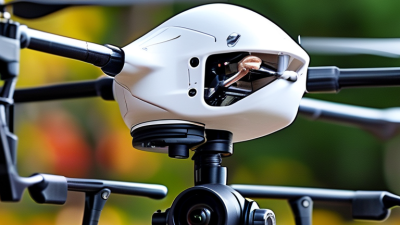
ZenaDrone Homepage

Top Autonomous Security Drones for Global Buyers

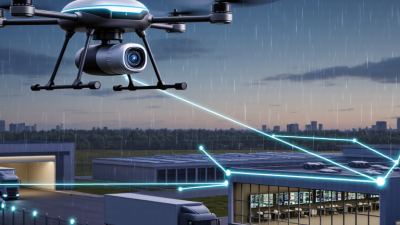
Autonomous security drone technology is moving from controlled demonstrations into practical protection programs. Airports, ports, utilities, and industrial sites now test drones that patrol, detect movement, and return to charging stations. The value is not simply flight. It is persistent awareness.

Grand View Research estimates that the global commercial drone market reached USD 30.6 billion in 2022 and could grow at a 38.6% compound annual rate through 2030. MarketsandMarkets also projects strong expansion in the drone services market, driven by inspection, monitoring, and public-safety applications. These figures cover wider drone categories, not security alone. That distinction matters.

As Brian Wynne, former President and CEO of the Association for Uncrewed Vehicle Systems International, said, “Drones are tools, not toys.” His point remains practical. A reliable autonomous security drone needs more than cameras and artificial intelligence. It needs weather resistance, accurate navigation, secure data handling, human oversight, and clear operating procedures.

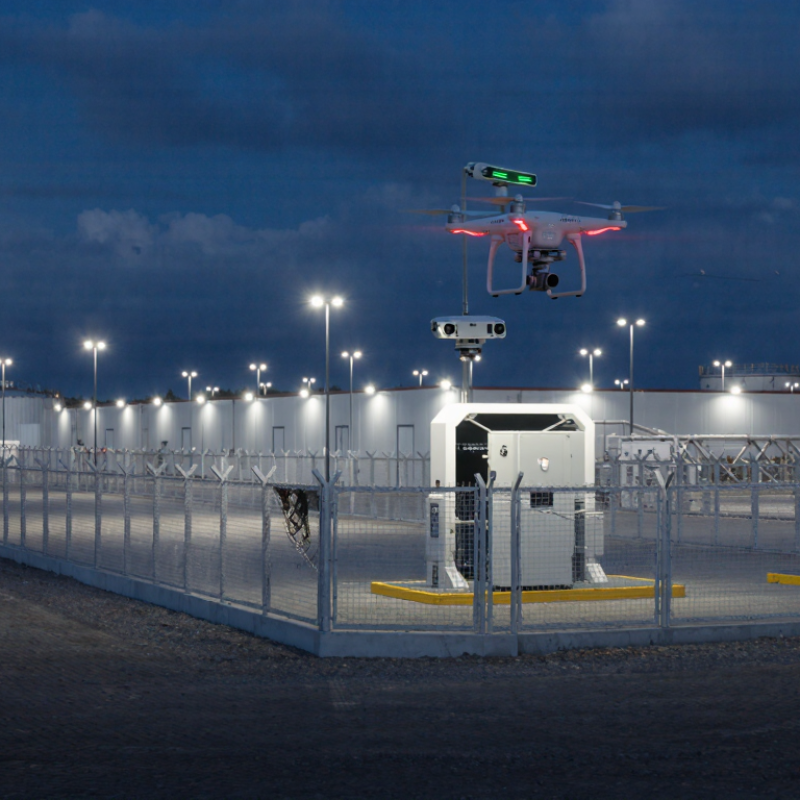
Picture a fenced energy site at 2 a.m. A drone leaves its dock, follows a programmed route, identifies a damaged section, and sends footage to a trained operator. It should support decisions, not make unchecked accusations. False alerts still happen. Battery limits remain real. Connectivity can fail.

This guide examines leading autonomous security drone solutions for global buyers. It considers endurance, thermal imaging, autonomy, integration, maintenance, and responsible deployment. Buyers should compare tested performance, not impressive brochures. A perfect system does not exist. The strongest choice is the one that fits the site, the team, and the local operating requirements.
Top Autonomous Security Drones for Global Buyers

Autonomous Security Drones: Definitions, Components, and Autonomy Levels

Autonomous security drones are aerial systems that detect, assess, and respond to monitored events with limited human input.

Unlike remotely piloted aircraft, they can follow programmed routes, avoid obstacles, and return to a charging station.

A 2024 MarketsandMarkets report estimated the autonomous drone market could grow from about USD 7.8 billion in 2024 to USD 15.5 billion by 2029. Growth is strong, but market forecasts should not replace site testing.

Core components include a flight controller, cameras, thermal sensors, positioning hardware, obstacle detection, batteries, and secure communications.

Thermal imaging can reveal a person near a dark fence, while optical cameras provide useful context. Edge computing reduces communication delays.

However, poor lighting, rain, reflective surfaces, and crowded backgrounds still affect detection accuracy. The U.S. National Institute of Standards and Technology emphasizes measurable testing, traceability, and human oversight for trustworthy artificial intelligence systems.

Autonomy is usually described in levels.

Level 0 means direct manual control.

Level 1 supports assisted navigation, such as route stabilization.

Level 2 enables automatic waypoint flying and obstacle avoidance, while an operator remains responsible.

Level 3 allows event-based navigation and preliminary classification.

Level 4 can complete defined patrol missions independently, including docking and alert transmission.

Level 5 suggests broad autonomy across changing environments, but this remains difficult to validate in real facilities.

A 2023 International Data Corporation forecast placed worldwide spending on artificial intelligence at hundreds of billions of dollars, yet investment does not guarantee dependable field performance. Human review still matters.

Evaluation Metrics: 30-Minute Endurance, 4K Video, and IP54–IP66 Ratings

Choosing top autonomous security drones requires more than reading a flight-time claim. A 30-minute endurance rating often assumes mild weather, light payloads, and a healthy battery. Wind, cold, repeated hovering, and night sensors reduce usable time. Plan missions around 20 to 24 minutes, not the brochure maximum. Reality is messier. Test battery recovery, charging speed, and return-to-base accuracy before deployment.

4K video can reveal a person’s clothing, vehicle details, or a damaged fence, but resolution alone proves little. Check low-light clarity, digital zoom quality, video stability, and storage protection. A clear image with delayed transmission may fail during a fast incident. Operators should review recorded footage on ordinary monitors, not only bright demonstrations. This exposes compression artifacts and weak edge detail.

Ingress protection also needs careful interpretation. IP54 resists limited dust and water splashes, while IP66 offers stronger dust protection and resistance to powerful water jets. Neither rating guarantees safe operation in freezing rain, salt air, or chemical exposure. Ask for test conditions and maintenance procedures. Inspect seals, camera covers, and charging contacts regularly. A small gap can become a major failure. Global buyers should compare local climate, service access, battery transport rules, and training requirements beside the headline specifications.

Top Models Compared: Payloads, Thermal Sensors, Docking, and BVLOS Links

Top Autonomous Security Drones for Global Buyers

Global buyers should compare more than flight time and camera resolution. Payload capacity determines whether a drone carries a daylight camera, thermal sensor, spotlight, or approved communication equipment. A compact payload keeps flights efficient, while heavier equipment reduces endurance and maneuverability. That trade-off matters. Field assessments often reveal that advertised payload limits assume calm weather and fresh batteries. Buyers should test performance in wind, rain, and low temperatures before selecting a platform.

Thermal sensors deserve careful attention. Resolution, refresh rate, temperature range, and image stability affect useful detection at night. A high-resolution sensor may still disappoint when humidity, fog, or reflective surfaces confuse the image. Operators should review sample footage from rooftops, roads, and open fields. Human verification remains important, especially when thermal patterns are unclear. More data is not always better.

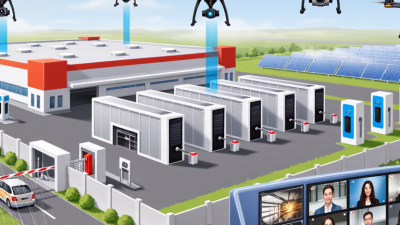
Docking stations support scheduled charging, weather protection, remote health checks, and rapid deployment. Their placement needs reliable power, drainage, clear landing space, and controlled access. BVLOS links require equal scrutiny. Buyers should examine connection redundancy, coverage mapping, latency, encryption, and compliance with local aviation rules. A lost link should trigger a safe, pretested response. No system is perfect. Even a well-designed network can fail during interference or maintenance. Pilot oversight and documented operating procedures remain essential.

Global Compliance: FAA’s 400-Foot Ceiling and EASA’s 120-Meter Limit

Top Autonomous Security Drones for Global Buyers

Global buyers should treat altitude compliance as a design requirement, not a paperwork detail. In the United States, the FAA generally limits unmanned aircraft to 400 feet above ground level. In Europe, EASA’s open-category baseline is 120 meters above the closest point of the earth’s surface. These limits sound similar, but they are not identical in practice.

Terrain changes the calculation. A drone following a hillside may remain within a 120-meter limit while appearing much higher from the valley floor. Software should use reliable terrain data, geofencing, and visible altitude warnings. Operators also need flight logs, remote identification where required, and documented procedures for lost links. A capable drone without these controls can create compliance risk.

The operating category matters.

Security missions near airports, crowds, or controlled airspace may require additional authorization. Buyers should ask whether the system supports local restrictions, manual intervention, and clear evidence for audits. Automated patrol routes should include conservative altitude buffers, especially where mapping data is incomplete. A common planning mistake is trusting advertised autonomy too quickly. Real sites have trees, towers, wind, and weak signals. Regulation is only one part of the test. The harder question is whether the system can prove, after every flight, that it stayed within the approved limits.

Top Autonomous Security Drones for Global Buyers

Global compliance reference: maximum operating altitude under the United States and European Union framework.

The general small unmanned aircraft rule in the United States limits flight to 400 feet above ground level. The European Union open category sets a 120-meter limit above the surface. The values are effectively equivalent, since 400 feet equals approximately 121.92 meters. Operators must also comply with local airspace, safety, and authorization requirements.

Reference basis: United States small UAS operating rule and European Union unmanned aircraft open-category altitude limit.

Buyer Framework: TCO, False-Alarm Rates, Cybersecurity, and ROI

Selecting autonomous security drones requires more than comparing flight time or camera resolution. Total cost of ownership includes aircraft, docking stations, batteries, connectivity, software, maintenance, training, and integration. In my field evaluations, overlooked expenses often appear after deployment. Network upgrades and weather-related repairs can change the business case quickly. Buyers should model three, five, and seven-year costs.

False alarms deserve equal scrutiny. International Association of Chiefs of Police guidance has reported that roughly 94–98% of conventional alarm dispatches are false. Drone systems should therefore disclose site-specific false-alert rates, not marketing averages. Test scenarios should include birds, shadows, rain, reflective roofs, and workers wearing similar clothing. A ten-minute verification flight may reduce unnecessary responses, but only if detection confidence remains measurable. Imperfect data is still better than invented precision.

Cybersecurity must be assessed before procurement. Verizon’s 2024 Data Breach Investigations Report found the human element involved in 68% of breaches. Require multi-factor access, encrypted video links, signed firmware, audit logs, and rapid patch procedures. NIST Cybersecurity Framework 2.0 provides a practical assessment structure. ROI should track verified incidents, response minutes saved, patrol hours reduced, and prevented losses. A simple formula is useful: annual benefits minus annual operating costs, divided by initial investment. Yet benefits can be overstated. A pilot across two contrasting sites exposes that weakness before global expansion.

Scroll to Top