



What Is an Autonomous Security Drone and How Does It Work?
An autonomous security drone is an aerial device that uses onboard sensors and software to monitor a defined area with limited, supervised human input. Unlike a remotely piloted drone, it can follow planned routes, detect selected events, and send alerts without an operator steering every movement. The word “autonomous” does not mean “unsupervised.” People still set operating rules and review important decisions.
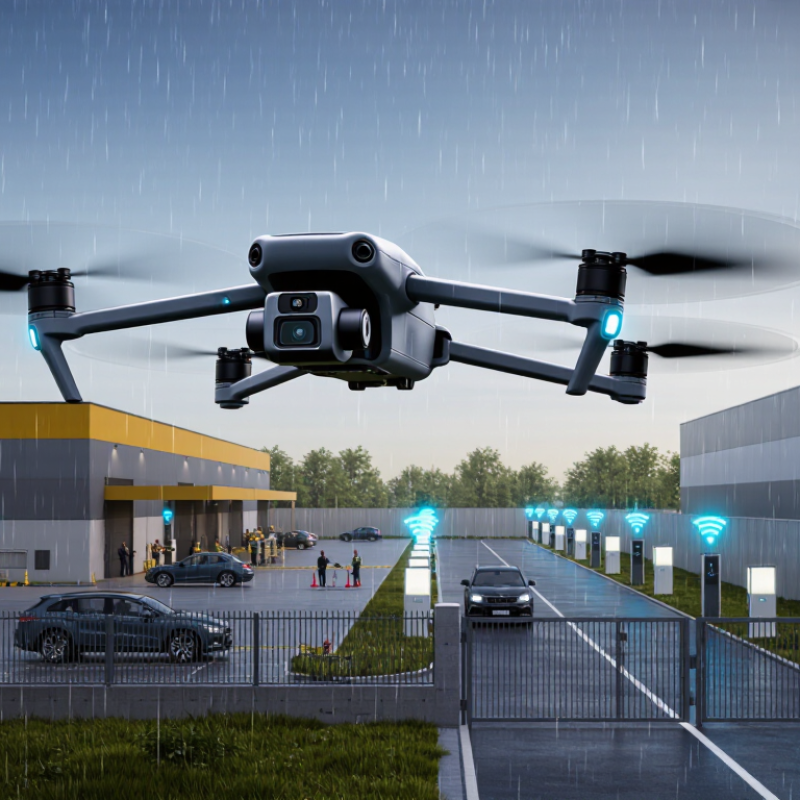
A typical system combines cameras, navigation sensors, mapping software, and wireless communication. During a patrol, the drone may compare live images with an established scene, such as a warehouse gate or parking lot. If it detects an unusual change, it can capture a short clip and notify an authorized security team. Some models return to a charging station when their battery runs low. A flashing status light and a quiet landing near the dock make the process easy to picture.
The details matter. Poor lighting, rain, blocked signals, or moving branches can produce missed detections or false alerts. No system is infallible. That sounds neat, perhaps too neat. Performance depends on careful setup, regular maintenance, and clear human oversight. Responsible deployments also limit data collection, protect stored footage, and respect people’s privacy. This guide explains what autonomous security drones do, how their main components work together, and where their capabilities have practical limits. It also considers questions worth asking before relying on one: What can it detect? Who reviews its alerts? And what happens when its sensors get it wrong?
What Is an Autonomous Security Drone?
An autonomous security drone is an aerial device that can follow a planned route and perform routine observation with limited moment-to-moment control. It may use cameras, thermal sensors, GPS, and onboard software to navigate and flag activity for review. “Autonomous” does not mean fully independent: people usually set its task, operating area, and safety limits.
During a patrol, the drone can check a fence line, hover near a gate, or return to a charging station when its battery runs low. Its software combines location data with sensor readings to avoid obstacles and maintain a route. If it detects an unusual movement, it can send an alert and a short video clip to a human operator. That review matters.
Conditions can still confuse it. Rain, glare, moving branches, or a weak connection may affect what its sensors capture. A person in a dark coat near a shadowed doorway, for example, may be difficult to classify correctly. Operators should verify alerts, keep records of system performance, and limit access to collected footage. Even a well-designed drone can miss context; that is an uncomfortable but necessary point to keep in view.
What Is an Autonomous Security Drone and How Does It Work?
| System or capability | What it does | How it works | Practical considerations |
|---|---|---|---|
| Autonomous security drone | An unmanned aircraft that can carry out defined security patrol tasks with limited direct piloting. | It combines flight-control software, onboard sensors, navigation, and mission instructions. Depending on the system, a person may approve the mission, monitor the flight, or take control when needed. | “Autonomous” does not necessarily mean fully independent. Capabilities and the level of human supervision vary by aircraft and operating rules. |
| Cameras and sensors | Collect visual or other environmental information for patrol and inspection. | Visible-light cameras capture images or video. Some aircraft may also use thermal cameras, which detect differences in infrared radiation rather than producing ordinary color images. | Image quality depends on lighting, weather, distance, camera angle, and sensor specifications. A thermal image does not identify a person with certainty by itself. |
| Navigation and positioning | Estimate the drone’s location and keep it on a planned route. | Systems may combine satellite positioning with inertial sensors, compass readings, barometers, and other methods. Some use visual or ranging sensors to help estimate movement and avoid obstacles. | Satellite signals can be weak or unavailable indoors, near obstacles, or in areas with interference. Navigation performance depends on the environment and system design. |
| Flight control | Maintain stable flight and carry out movement commands. | Flight-control software continually reads sensor data and adjusts the motors to manage direction, altitude, and stability. | Wind, precipitation, temperature, payload, and battery condition can affect flight. Operators should follow the aircraft’s specified operating limits. |
| Mission planning | Defines where, when, and how a patrol should take place. | A route or set of waypoints can be entered in mission software. The plan may include approved flight areas, altitude limits, scheduled checks, and return-to-home behavior. | Routes should account for people, buildings, restricted airspace, and changing site conditions. A planned route does not replace required safety checks. |
| Obstacle awareness | Helps the aircraft detect and respond to nearby obstacles. | Depending on the model, cameras, ultrasonic sensors, or other ranging sensors may provide information used by collision-avoidance functions. | Obstacle detection is not guaranteed in every direction or condition. Thin wires, reflective surfaces, poor lighting, and adverse weather can create challenges. |
| Detection and alerts | Flags activity or conditions that may need a security operator’s attention. | Software can analyze sensor data for configured events, such as movement in a monitored area. An alert can be sent to an operator for review. | Automated alerts can produce false positives or miss events. Human review is important before taking action based on an alert. |
| Communications | Connects the aircraft with operators or a control system. | A wireless data link may carry telemetry, commands, and sensor feeds. The available connection and range depend on the equipment, network, terrain, and local conditions. | Signal loss can interrupt live monitoring or control. Safe operations should include procedures for connection failure, such as a configured hold, landing, or return behavior. |
| Power and flight duration | Supplies energy for flight, sensors, and onboard computing. | Many small multirotor aircraft use rechargeable batteries. A mission system can monitor battery status and trigger a return or landing procedure when configured thresholds are reached. | Flight time varies with aircraft design, payload, weather, flight profile, battery condition, and other factors. No single duration applies to all security drones. |
| Human supervision | Allows a trained person to oversee the mission and respond to exceptions. | An operator may review alerts, monitor flight status, change a route, pause a mission, or take manual control, depending on the system and operating procedures. | Responsibility for safe and lawful operation remains important even when parts of a mission are automated. Applicable aviation rules may require specific levels of oversight. |
| Privacy and data handling | Governs how recorded images, video, and other data are collected and used. | Organizations can set monitoring zones, limit recording, control access, and define retention and deletion practices for collected data. | Privacy, surveillance, and data-protection requirements vary by location and use. Monitoring should be proportionate, authorized, and consistent with applicable law. |
| Operational limits | Set boundaries for where and how a drone may be flown. | Operations may be subject to aviation rules covering matters such as airspace, altitude, line of sight, flights over people, and required permissions. | Requirements differ by jurisdiction and operation. Operators should check current local rules and site-specific restrictions before each deployment. |
Related Posts
-
Why Choose an Autonomous Security Drone for Your Business?
-
Top 10 Autonomous Security Drones for Global Buyers
-
Top Autonomous Security Drones for Global Buyers
-
Top Home Security Drone Types for Global Buyers?
-
Why Are Security Drones Essential for Modern Surveillance?
-
China Top 10 Long Range Drone Manufacturers?