Top Search and Rescue Drone Solutions for Global Buyers?
In recent years, search and rescue drones have transformed emergency response operations. These high-tech tools enhance the efficiency of rescue missions and save lives in critical situations. As disasters become more frequent and complex, effective solutions are essential.
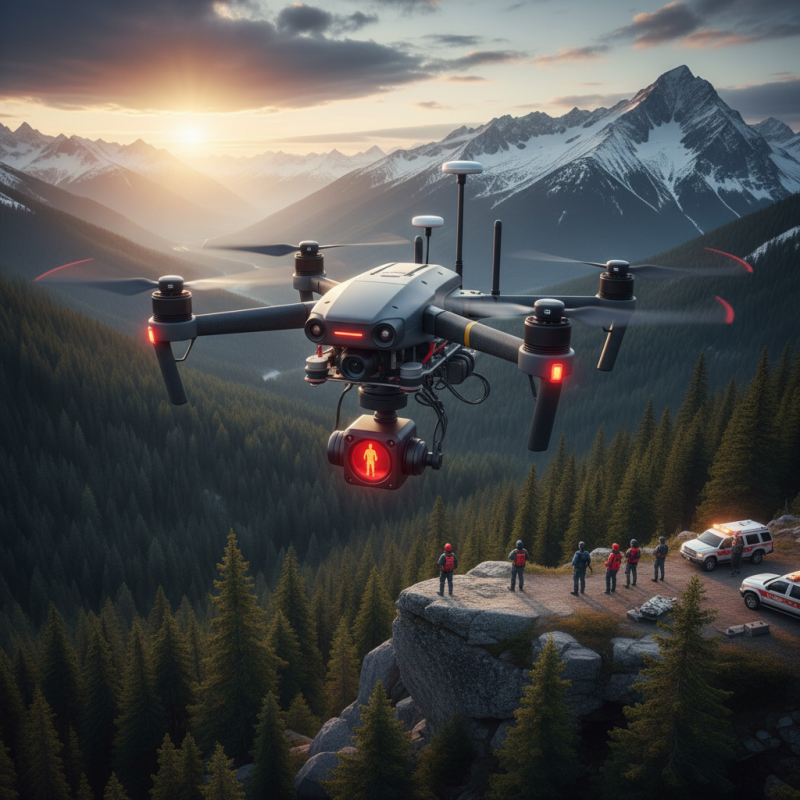
With the right search and rescue drone, teams can quickly locate missing individuals in challenging terrains. Reliable drones equipped with thermal imaging, GPS, and high-resolution cameras provide real-time data. This technology significantly improves decision-making processes during emergencies.
While many solutions are available, not all drones meet the demands of search and rescue missions. Buyers must consider factors such as flight time, payload capacity, and user-friendliness. Investing in a suitable drone can mean the difference between life and death. It is crucial to stay informed and assess various options tailored to specific needs.
Key Features of Search and Rescue Drones for Global Buyers
Search and rescue operations rely heavily on advanced technology. Drones play a crucial role, offering unique features that enhance mission effectiveness. These aerial units are equipped with high-resolution cameras. They provide real-time imaging, which is essential for locating missing persons quickly. The integration of thermal imaging technology helps detect heat signatures in challenging environments. These capabilities are invaluable during night operations or in dense vegetation.
Another key feature is the drone's flight endurance. Many search and rescue drones can operate for extended periods. This allows responders to cover vast areas without needing frequent recharges. Additionally, some drones are designed to endure harsh weather conditions. Robust builds ensure they can function in rain, snow, or high winds. This reliability is vital in critical situations where time is of the essence.
However, not all drones are suited for every environment. Challenges persist in remote areas with limited connectivity. Operators need reliable communication links for real-time data transmission. Moreover, the training of personnel in drone operation should not be overlooked. Lack of experience can lead to mishaps during missions. Continuous improvement of skills and technology adaptations are necessary for optimal results.
Popular Search and Rescue Drone Models in the Market Today
Search and rescue operations increasingly rely on specialized drones. These devices enhance situational awareness and improve response time during emergencies. Recent industry reports indicate that drones are becoming essential tools for various search and rescue missions. A study by the Association for Unmanned Vehicle Systems International (AUVSI) found that over 70% of agencies utilizing drones saw improved outcomes in rescue operations.
Popular drone models feature advanced capabilities. Many of these drones can cover vast areas and provide real-time video feeds. The ability to operate in harsh conditions, such as heavy rain or extreme temperatures, is a significant advantage. Furthermore, drones equipped with thermal imaging can locate missing persons in dense forests or disaster zones. However, not all drones perform well under all circumstances. Battery life can be a critical factor that limits operation time, making mission planning vital.
Adoption of drones in rescuing individuals is not without challenges. Training personnel to operate these devices safely is essential. Reports suggest that a lack of skilled operators can lead to ineffective missions. Evaluating each drone's specifications ensures the best fit for specific tasks. Despite the advancements, ongoing evaluation and adaptation are necessary for maximizing the potential of drone technology in search and rescue scenarios.
Top Search and Rescue Drone Solutions for Global Buyers
| Model |
Payload Capacity (kg) |
Flight Time (minutes) |
Range (km) |
Features |
| Drone A |
5 |
40 |
15 |
Thermal imaging, real-time video |
| Drone B |
10 |
50 |
20 |
High resolution camera, GPS tracking |
| Drone C |
3 |
30 |
10 |
Waterproof, night vision |
| Drone D |
8 |
60 |
25 |
Automated flight, obstacle avoidance |
| Drone E |
7 |
45 |
30 |
Live feed, thermal mapping |
Emerging Technologies in Search and Rescue Drone Solutions
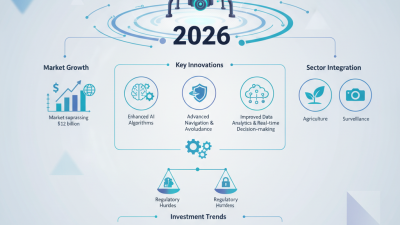
Emerging technologies in search and rescue (SAR) drone solutions are revolutionizing the way we respond to emergencies. Drones equipped with advanced sensors and imaging systems can quickly assess disaster-stricken areas. These technologies offer real-time data that enhances situational awareness. For instance, thermal imaging can locate missing persons at night, dramatically increasing survival chances.
AI-driven analytics are another pivotal advancement. They process vast amounts of data swiftly. Pattern recognition algorithms can identify potential hazards while optimizing rescue paths. This capability reduces response times significantly, which is crucial in emergencies. However, challenges remain. The reliability of drone systems in harsh weather conditions can be inconsistent.
Collaboration between technology developers and emergency responders is vital. Regular feedback from rescue teams helps tailor drone functions to meet practical needs. Despite ongoing improvements, it is crucial to ensure these drones are safe and effective. Developing standard operating protocols is necessary. The integration of this technology into existing rescue frameworks requires careful planning and consideration.
Regulations and Compliance for Operating Rescue Drones Worldwide
Operating rescue drones comes with strict regulations worldwide. Pilots must understand local laws before deployment. Each country has unique guidelines for drone operation in emergency scenarios. Non-compliance can lead to severe penalties.
Tips: Always check the local regulations before flying.
For instance, many countries require certification for drone pilots. This ensures that operators are trained to handle emergencies. Additionally, understanding no-fly zones is crucial. These areas often include airports and populated regions. Flying in restricted zones can endanger lives.
Tips: Use drone mapping tools to identify no-fly zones.
It's important to stay updated with changes in legislation. The rapid evolution of drone technology often prompts new rules. Regularly reviewing safety protocols can enhance operational readiness. Mistakes can happen, but learning from them is essential for improvement.
Tips: Join local drone operators’ groups for updates.
Top Search and Rescue Drone Solutions Worldwide
Cost Considerations and Budgeting for Search and Rescue Drones
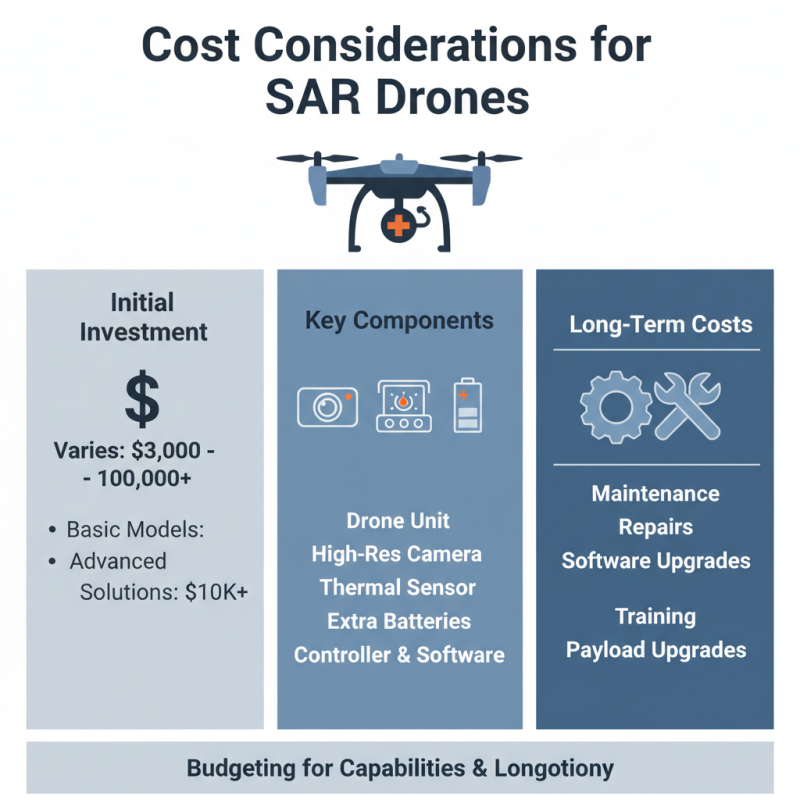
When considering search and rescue drones, cost is a crucial factor. The initial investment can vary significantly based on the drone's capabilities. Basic models may start around a few thousand dollars, while advanced solutions can reach tens of thousands. This budget includes not just the drone itself, but also essential accessories like cameras and thermal sensors.
Before making a purchase, it’s vital to assess the specific needs of your operations. Will you require high-resolution imaging? Or perhaps extended battery life for longer missions? These requirements will directly influence your budget.
**Tips:**
Always factor in maintenance costs. Quality drones often require ongoing care. Additionally, consider training expenses for operators to ensure safety and efficiency. Investing in comprehensive training can prevent mistakes that lead to costly repairs.
Budgeting effectively involves looking at the total cost of ownership. Consider potential upgrades or future needs. Drones are evolving rapidly, and you may need a model that adapts to changing scenarios. Always evaluate if the costs align with the expected return on investment.