What is a Professional Drone and How is it Used?
The term "professional drone" refers to advanced unmanned aerial vehicles designed for specific tasks. These drones play a vital role in various industries. They offer remarkable capabilities that enhance efficiency and productivity.
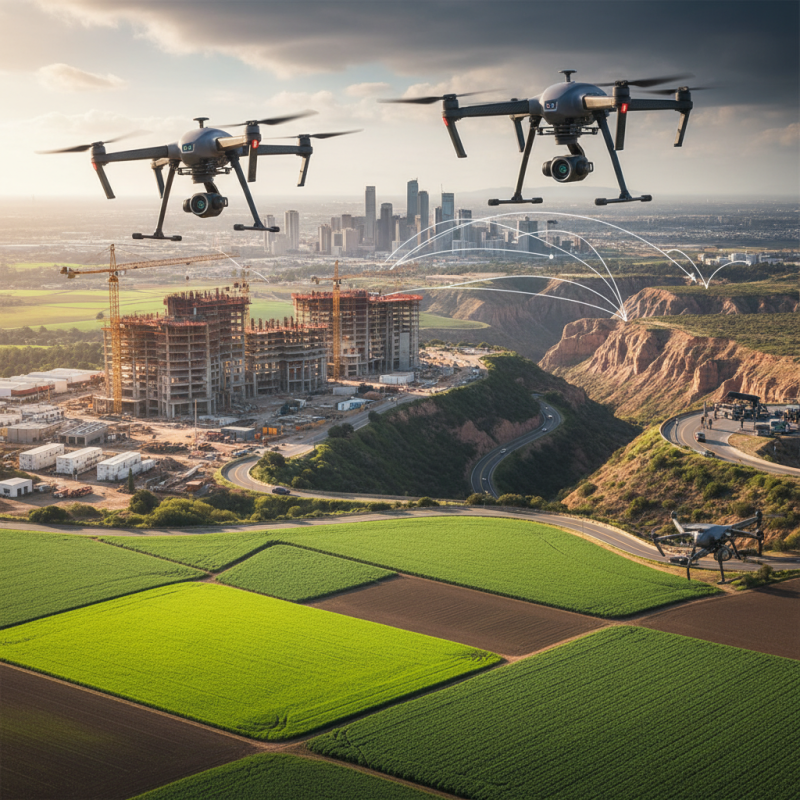
In agriculture, for instance, a professional drone can map fields and analyze crop health. This data aids farmers in making informed decisions. Construction sites benefit from aerial surveying, allowing teams to track project progression. In filmmaking, these drones capture stunning aerial shots with precision.
However, the use of professional drones isn't without challenges. Pilot training and equipment maintenance require significant investments. Operators must also navigate complex regulations, enhancing the need for comprehensive understanding. As the technology evolves, ethical considerations around privacy and airspace must be addressed. These dilemmas call for reflection on how we integrate drones into our world.
What Defines a Professional Drone in the Current Market?
In today’s market, a professional drone is defined by its capabilities and specifications. These drones typically feature high-quality cameras, robust flight systems, and extended battery life. They are often equipped with advanced sensors. This allows for precise measurements and enhanced safety during operation. Many professionals use these drones for various tasks, including aerial photography, surveying, and inspections.
Despite their advanced features, not all professional drones are perfect for every job. Users may find challenges in handling and operating them, especially in complex environments. Certain models can be cumbersome and require significant training to master. Additionally, these drones may have limitations in terms of payload or range. This can affect usability in some projects, leading to frustration.
The current market offers many options, but defining the right professional drone requires careful consideration. It’s essential to evaluate specific needs and operational environments. Choosing based solely on specifications can be misleading. Each user might have unique requirements that shape their experience and success. Therefore, reflections on personal needs can lead to better decisions in selecting a professional drone.
Key Features and Specifications of Professional Drones
Professional drones have become essential tools across various industries. Their key features enable them to perform complex tasks efficiently. High-resolution cameras are one of the prominent specs that set them apart. These cameras capture stunning aerial imagery, allowing for detailed inspections and surveys. Equipped with advanced stabilization systems, they ensure smooth and clear footage even in windy conditions.
Battery life is another crucial aspect. Most professional drones can operate for 20 to 40 minutes on a single charge. This time can be limiting for larger projects. Additionally, the flight range is typically substantial but can vary depending on the model. Some drones have a range of several kilometers, while others may be limited.
Each drone's payload capacity is also an important consideration. Many professional drones can carry additional equipment, such as thermal cameras or LiDAR sensors. However, this added weight might impact flight time and stability. Operators must balance the functionality with practicality. It’s vital to assess what features best meet specific needs without overcomplicating the use.
What is a Professional Drone and How is it Used? - Key Features and Specifications of Professional Drones
| Feature |
Specification |
| Camera Resolution |
Up to 20 MP |
| Flight Time |
30-50 minutes |
| Max Range |
5-10 km |
| Weight |
1-2 kg |
| GPS Mode |
Yes |
| Payload Capacity |
Up to 5 kg |
| Obstacle Avoidance |
Yes |
| Battery Type |
Lithium Polymer (LiPo) |
| Remote Control |
Radio Frequency |
| Use Cases |
Photography, surveying, agriculture, inspections |
Popular Applications of Professional Drones Across Various Industries
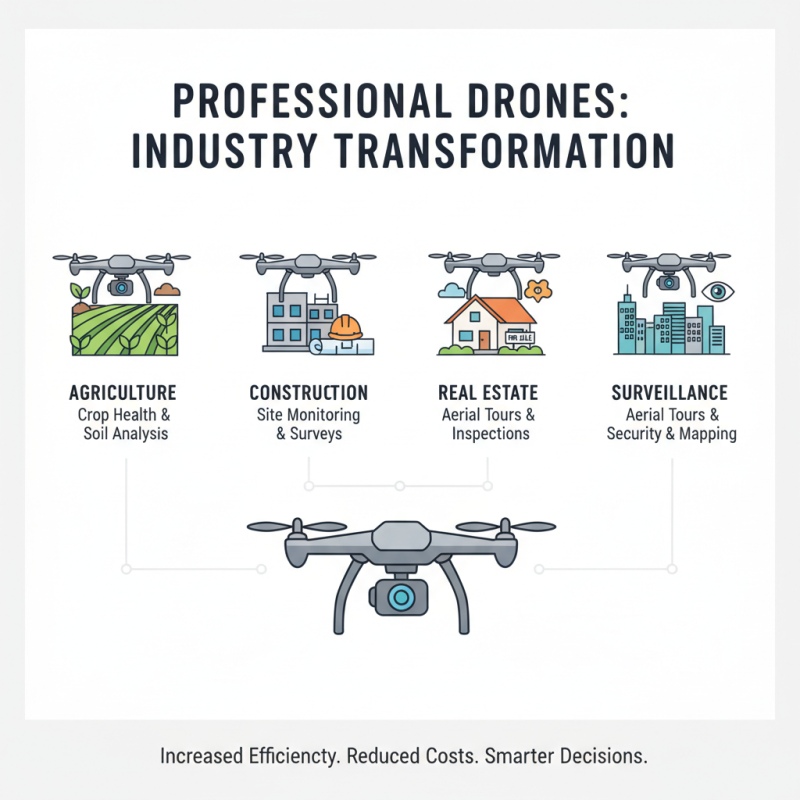
Professional drones have transformed various industries with their advanced capabilities. These devices are now being used in agriculture, construction, real estate, and surveillance. For instance, in agriculture, farmers utilize drones to monitor crop health and assess soil conditions. This not only saves time but also boosts productivity.
In construction, drones capture high-resolution images of sites. They help architects and project managers track progress and identify potential issues early. In real estate, aerial photography offers stunning views of properties, appealing to potential buyers. Drones can highlight features that ground-level photography cannot.
Here’s a tip: Ensure pilots are trained and certified. Knowledge of local regulations is crucial. Another tip is to keep the drone well-maintained. Regular checks can prevent malfunction during flights. When using drones for surveys, planning flight paths is essential. This avoids obstacles and ensures data accuracy. Drones can offer fantastic benefits, but a lack of planning can lead to mistakes. Reflect on your flight goals and adapt your approach as needed.
Market Growth Statistics for Professional Drones in 2023
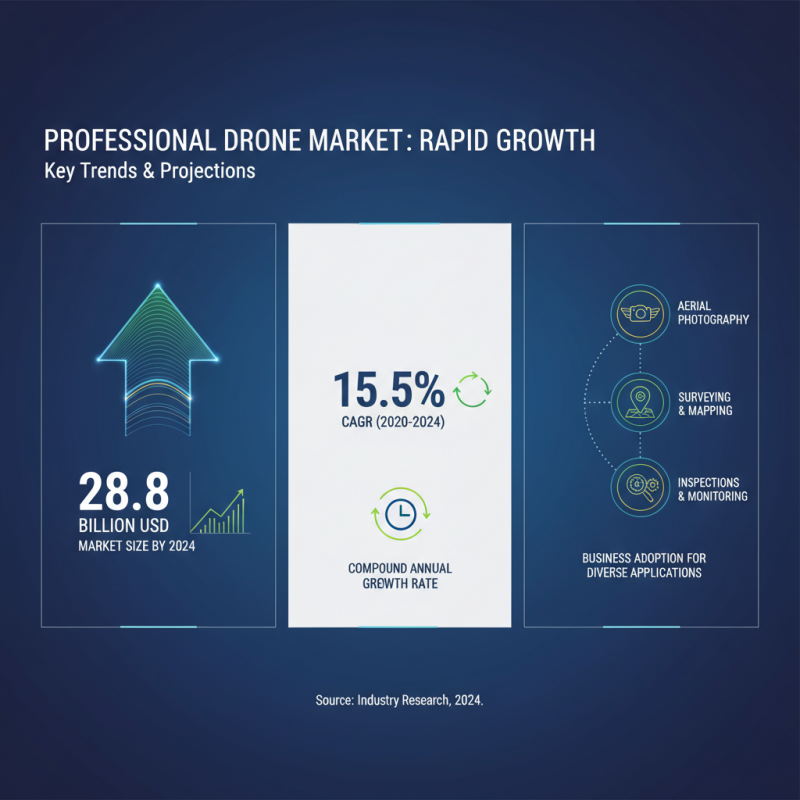
The professional drone market is witnessing rapid growth. Research indicates that this market is expected to reach $28.8 billion by 2024. It has a compound annual growth rate (CAGR) of 15.5% from 2020 to 2024. Businesses are increasingly adopting drones for various applications, from aerial photography to surveying and inspections.
Some sectors show substantial growth. Agriculture utilizes drones for crop monitoring and management. Infrastructure inspection is another area where drones provide efficiency. Reports suggest that 70% of construction companies now use drones.
Tips: When considering drones, assess your needs carefully. Different models serve diverse purposes. Think about the regulatory environment. Ensure compliance with local laws. Flight operations require proper training, which is vital.
Overall, despite rapid advancements, some challenges persist. Issues like battery life and payload capacity can hinder operations. The technology is not without flaws. Companies need to analyze the ROI of drone investments. Balancing benefits and drawbacks is essential for effective use.
Safety Regulations and Compliance Standards for Professional Drone Use
When it comes to professional drone use, safety regulations are essential. Each country has its own set of rules. These rules ensure both the operator's safety and the public's safety. Operators must often register their drones before flight. Some areas require permits for drone operations. Understanding these rules can be confusing. Many new users overlook important regulations.
Compliance standards exist to guide drone operators. These standards cover various aspects, from pilot certification to equipment requirements. For example, certain drones must have safety features like obstacle detection. Failing to comply can lead to fines or accidents. Yet, even experienced operators sometimes miss updates in regulations. This can create liability issues.
Keeping up with safety regulations requires ongoing education. Many organizations offer resources for drone operators. Workshops and online courses can help. Staying informed enhances safety. It also ensures that drone operations remain lawful and responsible. Small lapses in knowledge can have serious consequences.
Usage of Professional Drones Across Different Industries