
Choosing the right Vacuum Furnace Heat Treatment system in 2026 requires more than comparing chamber size or purchase price. The real decision begins with your alloy, part geometry, production volume, and required surface quality. A titanium component may need high vacuum and careful cooling control. Tool steel may demand precise pressure, temperature, and quenching speed.
Dr. Hans J. Herring, a recognized author and consultant in vacuum heat treatment, has stated, “The furnace is only one part of the heat-treatment process.” This principle remains highly relevant. A modern furnace can reach 1,200°C, but poor loading patterns may still create uneven hardness. A shiny chamber does not guarantee reliable results.
Look closely at temperature uniformity, vacuum performance, gas-quenching capacity, controls, maintenance access, and technical support. Ask for actual test data, not only impressive specifications. Check whether the supplier can process your largest and heaviest parts without hidden limitations. Energy consumption also matters in 2026, especially when production runs last several hours.
There is no perfect furnace.
A cheaper system may increase rework, distortion, or testing costs. An advanced system may be unnecessary for simple carbon-steel parts. I have found that many buyers focus too heavily on maximum temperature. That can be a mistake. Repeatability, documented recipes, and operator training often create greater value over time. This guide explains how to compare these factors, challenge supplier claims, and select Vacuum Furnace Heat Treatment equipment that fits both today’s workload and tomorrow’s manufacturing demands.
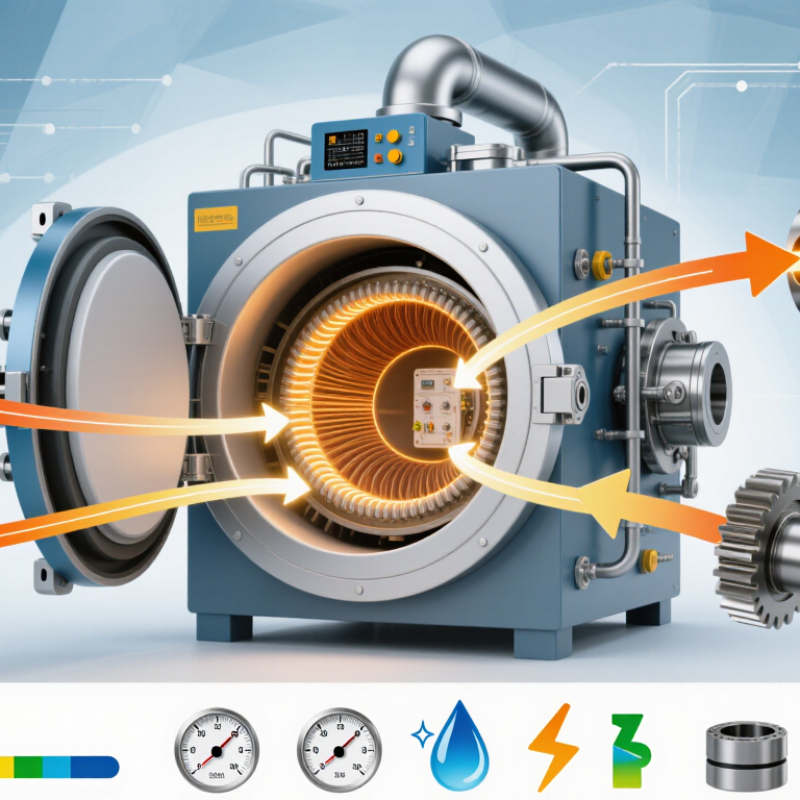
Vacuum furnace heat treatment changes metal properties inside a sealed chamber with very little air. The furnace removes oxygen, heats components uniformly, and then cools them with controlled gas pressure. This limits oxidation, scaling, and surface contamination. The result can be a cleaner finish and more predictable hardness.
The process suits tool steels, stainless steels, titanium alloys, and aerospace-grade components. Temperature, vacuum level, holding time, and quench pressure must match the alloy. A 2024 report from Grand View Research describes steady, mid-single-digit annual growth for the global vacuum furnace market through 2030. That trend reflects demand for cleaner processing and tighter dimensional control. Yet market growth does not replace process knowledge.
Selection in 2026 should begin with the part, not the furnace brochure. Check its maximum temperature, working-zone size, load weight, and cooling capability. Ask for temperature-uniformity records, calibration history, and leak-rate data. AMS2750-based controls are widely used for aerospace heat-treatment verification. The U.S. Department of Energy’s Industrial Decarbonization Roadmap identifies process heating as roughly 51% of industrial energy use. Energy consumption therefore deserves attention during equipment comparison. A smaller furnace may waste less energy, but poor loading can reduce uniformity. This is where many evaluations become too optimistic. A shiny surface does not prove correct metallurgical properties. Test coupons, hardness mapping, and cross-section inspection remain necessary. The furnace is only one part of the treatment system.
Vacuum heat treatment is not required for every steel part. It becomes valuable when surface cleanliness, dimensional stability, or controlled atmosphere matters. Tool steels, high-speed steels, stainless steels, nickel alloys, titanium alloys, and selected cobalt alloys often benefit. These materials can react with oxygen during heating. That reaction may create scale, decarburization, or a weakened surface. A vacuum furnace limits those problems through low-pressure heating and carefully controlled gas cooling. The result is usually a cleaner part with less post-treatment grinding. Cleaner matters.
Parts with tight tolerances deserve special attention. Examples include injection molds, cutting tools, precision shafts, medical instrument components, turbine hardware, and high-load gears. Thin sections and intricate cavities may distort during conventional treatment. Vacuum processing can reduce uneven heating, but it cannot correct poor design or careless loading. I have seen small fixtures warp when parts touched each other or blocked gas flow. Load spacing matters. Engineers should review alloy grade, hardness target, section thickness, and cooling requirements before selecting a cycle. For some low-alloy steels, vacuum treatment may cost more without providing meaningful performance gains. That judgment needs evidence, not habit. Test coupons, hardness checks, and dimensional measurements improve confidence after treatment. Even then, results may vary with furnace condition and part geometry. A qualified heat-treatment provider should document temperature uniformity, vacuum level, gas pressure, and inspection results.
| Material or Material Family | Representative Grades | Typical Vacuum Heat-Treatment Operation | Indicative Temperature Range | Typical Parts | Why Vacuum Is Selected | Key Process Considerations |
|---|---|---|---|---|---|---|
| Cold-work tool steels | D2, A2, O1, M2 | Vacuum hardening, gas quenching, double or triple tempering | Austenitizing commonly about 950–1,230°C; tempering commonly about 150–650°C | Blanking dies, punches, forming tools, shear blades, precision inserts | Reduces oxidation and decarburization, preserving sharp edges and dimensional accuracy | Use a grade-specific austenitizing schedule; control pressure and gas-quench speed to limit distortion and cracking. |
| Hot-work tool steels | H11, H13, H21 | Vacuum hardening followed by multiple tempering cycles | Austenitizing commonly about 1,020–1,180°C; tempering commonly about 500–650°C | Die-casting dies, extrusion dies, forging dies, hot punches | Maintains surface quality and reduces scale on complex die surfaces | Uniform heating and controlled high-pressure gas cooling are important for die life and toughness. |
| High-speed steels | M2, M35, M42 | Vacuum austenitizing, high-pressure gas quenching, multiple tempering | Austenitizing commonly about 1,180–1,250°C; tempering commonly about 540–600°C | Drills, milling cutters, broaches, taps, reamers | Protects high-alloy surfaces and supports repeatable hardness and cutting-edge geometry | A precise thermal cycle is essential because carbide distribution and retained austenite affect tool performance. |
| Precipitation-hardening stainless steels | 17-4 PH, 15-5 PH, 13-8 Mo | Solution treatment and age hardening; vacuum may be used for clean, low-oxidation processing | Solution treatment commonly about 1,025–1,050°C; aging commonly about 480–620°C | Aerospace fittings, shafts, valve components, molds, precision brackets | Limits scale and improves surface cleanliness before final machining or assembly | The required aging condition strongly influences strength, toughness, and corrosion resistance. |
| Martensitic stainless steels | 420, 440C, 1.4116 | Vacuum hardening and tempering | Austenitizing commonly about 980–1,100°C; tempering commonly about 150–650°C | Surgical instruments, bearings, knife components, wear parts | Reduces oxidation and helps retain corrosion-resistant surface chemistry | Avoid excessive decarburization, overheating, and unsuitable cooling rates that may increase retained austenite. |
| Austenitic stainless steels | 304L, 316L, 310 | Vacuum solution annealing or vacuum brazing, where surface cleanliness is critical | Solution annealing commonly about 1,040–1,120°C | Heat exchangers, medical components, clean-process hardware, welded assemblies | Minimizes scale and contamination and supports a clean surface after treatment | Rapid cooling may be needed to limit sensitization; the specification determines the cooling requirement. |
| Titanium alloys | Ti-6Al-4V, Ti-6Al-2Sn-4Zr-2Mo | Stress relieving, annealing, solution treatment, aging, and vacuum brazing | Commonly about 480–955°C, depending on alloy and operation | Aerospace brackets, compressor parts, medical implants, thin precision components | Titanium reacts readily with oxygen, nitrogen, and hydrogen at elevated temperature; vacuum reduces contamination risk | Control residual gases and leakage carefully; excessive contamination can form a brittle alpha case. |
| Nickel-based superalloys | Alloy 718, Waspaloy-type alloys, nickel-chromium alloys | Solution treatment, precipitation aging, stress relief, and vacuum brazing | Commonly about 650–1,200°C, depending on alloy and cycle | Turbine hardware, exhaust components, high-temperature fasteners, hot-section parts | Limits oxidation and supports control of precipitation reactions and surface chemistry | Heating rate, soak time, cooling rate, and aging sequence must match the alloy condition and required properties. |
| Aluminum alloys | 6061, 7075, 2024, 7050 | Solution heat treatment, rapid quenching, and artificial aging; specialized vacuum systems may be used | Solution treatment commonly about 450–550°C; aging commonly about 120–190°C | Aircraft fittings, machined housings, structural frames, precision plates | Useful when low oxidation and clean processing are required, especially for sensitive surfaces | Vacuum processing is not automatically suitable for every aluminum grade; protect against magnesium evaporation and achieve the specified rapid quench. |
| Copper and copper alloys | Oxygen-free copper, brass, bronze, CuCrZr | Annealing, stress relieving, solution treatment, and vacuum brazing | Commonly about 300–1,050°C, depending on alloy and operation | Electrical contacts, heat sinks, busbars, brazed assemblies, thermal components | Reduces surface oxidation and helps maintain electrical and thermal contact quality | Avoid overheating and contamination; use suitable fixtures to prevent sagging in thin or heavy copper parts. |
| Powder-metallurgy tool steels | High-carbon, high-chromium and high-speed PM grades | Vacuum hardening, high-pressure gas quenching, cryogenic treatment where specified, and tempering | Austenitizing commonly about 1,000–1,230°C; tempering commonly about 500–600°C | Fine blanking tools, wear-resistant inserts, precision cutting tools | Protects the finely distributed carbide structure and minimizes surface damage | Uniform loading, accurate temperature measurement, and adequate gas flow are critical for consistent hardness. |
| Bearings and bearing steels | High-carbon chromium bearing steels and corrosion-resistant bearing grades | Vacuum hardening, sub-zero or cryogenic treatment when specified, and tempering | Austenitizing commonly about 800–1,100°C; tempering commonly about 150–250°C | Rings, rollers, races, precision bearing components | Provides a clean raceway surface and helps control distortion and dimensional change | Retained austenite, dimensional stability, cleanliness, and surface hardness require strict process control. |
| Powder-metal and additively manufactured parts | Stainless steels, tool steels, titanium alloys, nickel alloys | Stress relief, homogenization, solution treatment, aging, and sometimes hot vacuum processing | Commonly about 300–1,200°C, depending on material and intended property | Lattice structures, conformal-cooling inserts, lightweight brackets, complex internal channels | Reduces oxidation in intricate channels and supports controlled stress relief and microstructure development | Part orientation, support removal, porosity, trapped powder, and fixture design may affect heat transfer and distortion. |
| Vacuum-brazed assemblies | Stainless steel, nickel alloys, copper alloys, titanium assemblies | Vacuum brazing with a compatible filler metal, followed by controlled cooling or post-braze treatment | Commonly about 600–1,200°C, depending on base metal and filler metal | Heat exchangers, honeycomb structures, manifolds, filter packs, carbide assemblies | Flux-free joining, low residue, good joint visibility, and reduced oxidation | Joint clearance, filler placement, surface preparation, vacuum cleanliness, and heating uniformity determine joint quality. |
How to Choose Vacuum Furnace Heat Treatment in 2026?
Selecting the right vacuum furnace process starts with the material, not the machine. Tool steel may require vacuum hardening, while titanium often needs controlled vacuum annealing. Nickel alloys may require solution treatment followed by rapid gas cooling. The furnace must match the alloy, load size, wall thickness, and distortion risk. Small parts can overheat quickly. That detail is often underestimated.
Energy performance also deserves attention. The U.S. Department of Energy reports that process heating represents about 51% of manufacturing energy use. A vacuum cycle with unnecessary holding time can increase cost without improving hardness. The 2024 Wohlers Report valued the additive manufacturing industry at over 20 billion dollars in 2023. This growth increases demand for stress relief, solution treatment, and homogenization of printed metal parts. However, not every printed component needs the same cycle.
Ask for temperature uniformity data, vacuum leak-rate records, cooling-gas pressure, and actual test coupons. ISO 13504 and relevant ASTM methods can support process verification, but paperwork cannot replace metallurgical evidence. Check hardness, microstructure, tensile strength, and dimensional change after treatment. Trial runs are valuable. They are not perfect. A cycle that works for one batch may fail after loading changes. Review results with a qualified heat-treatment engineer, then adjust temperature, ramp rate, and cooling speed carefully.
When choosing a vacuum furnace in 2026, compare specifications against your actual workload, not brochure language. Capacity comes first. Measure the largest batch, fixture weight, and required spacing around parts. A chamber that is too full may lose temperature uniformity and slow heat transfer. Compare the rated temperature with the working temperature, then check uniformity data at your real loading pattern. AMS 2750H remains a useful reference for temperature sensors, calibration, and uniformity testing in aerospace-related heat treatment.
Vacuum performance needs equal attention. Compare ultimate pressure, leak rate, pump-down time, and recovery after door opening. A lower pressure does not automatically produce cleaner parts. Gas purity, furnace cleanliness, and fixture condition also affect oxidation risk. The U.S. Department of Energy’s Industrial Decarbonization Roadmap reports that process heating represents about 51% of industrial energy use. That figure makes energy measurement practical, not cosmetic. Request electricity consumption per batch, cooling-water demand, and idle power data.
Quench capability can decide production quality. Compare gas pressure, flow direction, cooling curves, and maximum load mass. A 10-bar system may not cool every geometry evenly. Ask for measured results using your alloy and section thickness. Controls should record temperature, pressure, gas flow, alarms, and recipe changes. The 2023 IEA Energy Technology Perspectives stresses the importance of efficiency and digital monitoring in industrial equipment. Still, digital records cannot repair poor sensor placement. I would also question optimistic cycle-time claims; they often exclude loading, pump-down, cooling, and inspection.
Choosing vacuum furnace heat treatment requires more than comparing maximum temperature. Quality begins with stable temperature uniformity, reliable vacuum levels, and repeatable cooling performance. Ask for recent calibration records and sample batch data. Inspect the chamber, heating elements, insulation, and monitoring sensors. A clean, bright chamber often reveals disciplined maintenance.
Cost needs a wider view. Purchase price is only one line. Include energy consumption, loading capacity, cycle time, maintenance, tooling, and possible downtime. A cheaper furnace may become expensive after repeated repairs. However, the most advanced system is not automatically the best choice. Your parts, alloy, tolerance, and production volume should guide the specification. Early cost estimates can still miss hidden training and installation expenses.
Tips: Request a trial run using representative parts. Confirm safety interlocks, emergency procedures, and documented operator training. Ask how the supplier handles alarms, spare parts, software updates, and urgent technical support. Response time matters when a furnace stops at 2 a.m. Check whether service engineers understand your process, not just the equipment. Get clear acceptance criteria in writing. Do not rely on confident promises alone. Personally, I would also review failed batches and corrective actions, because perfect performance claims deserve careful questioning. Supplier support should remain available after installation, when real production exposes small weaknesses.