
Finding a dependable Laser Lighting Factory China requires more than comparing catalog prices. Product photos can look impressive while hiding weak heat management, inconsistent brightness, or unstable driver components. A reliable supplier should explain these details clearly.
Start by checking the factory’s production experience and technical capabilities. Ask about optical design, LED binning, housing materials, cooling systems, and quality-control procedures. Request recent product samples, not only showroom models. Test them for brightness consistency, color temperature, flicker, noise, and operating heat. Small differences often reveal large manufacturing problems.
A serious factory should provide clear business information and relevant compliance documents. These may include test reports, quality certificates, and product specifications for your target market. Verify that the documents match the actual model and production site. A professional sales team should answer technical questions without avoiding uncomfortable details.
Factory communication also matters. Notice how quickly the supplier responds to design changes, packaging requirements, and sample feedback. Good communication reduces mistakes during mass production. It also creates a written record for future accountability. Video tours can help, but an independent audit offers stronger evidence when the order is important.
Pricing deserves careful judgment. The cheapest quotation may exclude testing, spare parts, safer packaging, or after-sales support. A detailed quotation should list materials, warranty terms, lead time, payment stages, and inspection standards. Never rely only on promises.
No checklist is perfect. Even experienced buyers can miss a hidden weakness. Therefore, combine documentation, sample testing, factory verification, and gradual order planning. The right partner may not offer the lowest price. It should offer stable performance, honest communication, and evidence that supports every important claim.
Before contacting a laser lighting factory in China, define the product precisely. “A bright laser” is not enough. Record the intended venue, audience distance, installation height, operating hours, and ambient temperature. Specify the required colors, wavelength range, optical power, beam diameter, divergence, scan angle, and modulation method. These details help engineers select suitable components instead of guessing.
Control requirements also matter. State whether the fixture needs DMX, Art-Net, automatic programs, or another control system. Describe the housing, cooling method, mounting position, input voltage, and protection rating. For outdoor use, moisture and dust resistance need clear targets. Ask for measured test data, not only catalog values. Request beam photos, electrical drawings, safety labels, and a sample unit for evaluation.
I learned that small omissions can create expensive changes. A narrow beam may look impressive indoors but perform poorly across a large stage. A quiet fan may also reduce cooling capacity. That trade-off needs testing. Ask the factory how it checks output stability, scanning accuracy, thermal performance, and emergency shutoff functions. Confirm that the proposed design follows applicable electrical and laser safety requirements in your sales market. I would also request a written tolerance range, because “high precision” sounds useful but proves little. Leave room for revision. Your first specification may be incomplete, and practical testing can expose details you did not predict.
How to Find a Reliable Laser Lighting Factory in China?
Research and Shortlist Qualified Chinese Manufacturers
China offers a deep supplier base, but factory selection requires more than comparing quotations. Grand View Research reports that the global laser lighting market is expanding steadily, driven by entertainment, automotive, and architectural applications. This growth attracts capable producers and inexperienced traders. Shortlist factories with verifiable production records, engineering teams, and export experience.
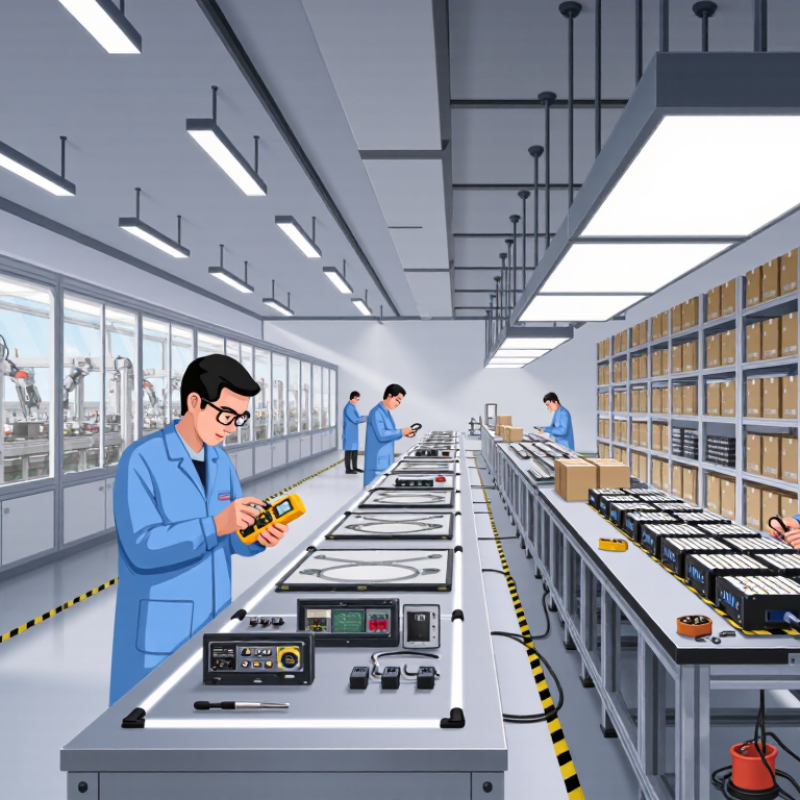
Ask each candidate for a current business license, factory address, equipment list, and quality certificates. Request a live video audit. Look for clean assembly benches, calibrated optical testing equipment, and labeled component storage. A serious factory should explain beam divergence, thermal control, driver performance, and lifetime testing clearly. Ask for test reports linked to a specific sample, not generic files. Check whether the factory controls key processes internally or outsources everything.
Use the National Bureau of Statistics’ 2024 manufacturing PMI data as wider market context. China’s annual manufacturing PMI remained near 49.8, showing uneven industrial demand. This matters because low utilization can affect delivery stability and technical staffing. Ask for recent production schedules and customer references where disclosure is permitted. A sample may perform well, yet mass production can reveal color shifts or unstable power output. I have seen suppliers answer quickly but avoid precise tolerances. That is a warning. Do not ignore it. Shortlist fewer factories, then compare samples under identical voltage, operating time, and ambient temperature.
Recommended screening weights for shortlisting qualified Chinese laser lighting manufacturers. Give the highest priority to technical compliance and optical safety, then verify quality systems, production capability, sample performance, and export documentation.
A dependable factory should prove its capabilities, not simply display attractive product photos. Request a live video tour of the workshop, assembly lines, aging area, and optical testing room. Check whether technicians use calibrated power meters, spectrometers, thermal cameras, and beam alignment tools. Ask for calibration records and sample test reports. These details reveal daily practice.
Certification is useful, but it is not automatic proof of quality. The ISO Survey 2022 recorded about 1.27 million ISO 9001 certificates worldwide. This scale shows that certification is common, not necessarily decisive.
Verify the certificate number, factory address, scope, and issuing body independently. For laser products, request evidence related to IEC 60825-1, electrical safety, electromagnetic compatibility, and applicable market requirements.
A factory should also explain risk controls for eye exposure, overheating, and mechanical failure.
A serious quality system links every unit to materials, operators, inspection results, and shipment records. Ask for incoming inspection procedures, production checkpoints, final testing, and corrective-action reports. Review whether failed units are isolated and analyzed, rather than quietly reworked.
Visit the factory if possible. Dust on an optical bench may seem minor, but it can affect beam consistency.
My own caution is simple: polished samples can hide weak mass production. Order a pilot batch and compare output, color stability, temperature rise, and packaging damage across several units. Insist on written acceptance criteria before payment.
Finding a reliable laser lighting factory starts with comparable samples. Request three identical units, not one polished prototype. Check beam uniformity, color stability, fan noise, housing temperature, and output after continuous operation. Ask for measured data, test conditions, and calibrated instrument details. IEC 60825-1 provides a useful reference for laser product safety classification. A factory that avoids these questions deserves caution. Small details matter.
Pricing should include the complete purchasing picture. Compare unit cost, sample fees, packaging, testing, spare parts, tooling, and shipping terms. A low quotation may hide weak thermal components or inconsistent drivers. McKinsey’s 2020 Global Survey reported that 93% of supply chain leaders planned to increase resilience investment. That finding supports paying for verified quality, not merely choosing the cheapest offer. I would also request a written warranty and a replacement process. My earlier mistake was comparing prices before confirming identical specifications.
Lead times need evidence. Ask for a production schedule, component availability, inspection date, and shipping estimate. The World Bank’s 2023 Logistics Performance Index gave China a score of 3.7 out of 5, showing strong logistics capability but not guaranteed factory performance. Keep buffer time for approval and rework. Communication is another measurable test. Send the same technical questions to several suppliers, then compare reply speed, accuracy, drawings, and willingness to admit limitations. Clear English helps. Honest uncertainty helps more. A factory that documents changes, shares inspection records, and reports delays early is usually safer to evaluate.
| Anonymous Factory Profile | Sample Evaluation | Indicative Sample Cost | Indicative Unit Price (500 Units) | Sample Lead Time | Bulk Production Lead Time | Quality & Compliance Documents | Communication Performance | Customization Capability | Overall Assessment |
|---|---|---|---|---|---|---|---|---|---|
| Factory A Established exporter | Stable brightness and clean housing finish. Beam angle and color temperature were close to the specification. | US$80–150 Refundable after bulk order | US$18.50–24.00 | 7–10 calendar days | 25–35 calendar days | RoHS and CE test reports available. Batch inspection records provided upon request. | Replies within one business day; quotation and technical answers were organized. ★★★★★ | Custom housing color, cable length, logo marking, and packaging. | Strong candidate |
| Factory B Cost-focused manufacturer | Functional sample with acceptable output, but minor variation was found in surface finishing and cable labeling. | US$50–100 Usually non-refundable | US$14.00–18.00 | 10–14 calendar days | 30–45 calendar days | Basic CE and RoHS files available. Confirm report validity and product-model matching before ordering. | Replies within one to two business days; several technical details required follow-up. ★★★☆☆ | Basic logo and packaging changes; limited tooling support. | Suitable for cost-sensitive orders |
| Factory C Engineering-oriented manufacturer | Strong optical consistency and good thermal-management design. Sample documentation was detailed. | US$120–220 Partly refundable | US$22.00–30.00 | 12–18 calendar days | 35–50 calendar days | Photometric data, material specifications, and applicable safety reports available. Independent inspection accepted. | Technical replies were detailed, but commercial responses took longer during peak periods. ★★★★☆ | Optical specification changes, heat-sink adjustments, control options, and custom mounting parts. | Strong for technical projects |
| Factory D Small-batch supplier | Attractive appearance and quick prototype delivery, but long-duration testing data was limited. | US$60–120 Refund policy varies | US$16.00–22.00 | 5–8 calendar days | 20–30 calendar days | Product declarations available; complete third-party testing documentation should be confirmed before shipment. | Fast replies through instant messaging; information was sometimes informal and needed written confirmation. ★★★☆☆ | Flexible packaging, cable, and mounting changes; limited capacity for major redesigns. | Good for pilot orders |
| Factory E High-volume production facility | Consistent sample dimensions and packaging. Production sample approval process was clearly defined. | US$90–180 Refundable under agreed terms | US$15.50–21.50 | 8–12 calendar days | 20–30 calendar days | Quality-control procedure, incoming-material checks, and pre-shipment inspection can be documented. | Replies within one business day; uses standard quotation and approval templates. ★★★★☆ | Private labeling, carton design, assembly options, and repeat-order production planning. | Good for repeat orders |
| Factory F Trading-led supply channel | Sample matched the general appearance, but the production source and component details were not fully transparent. | US$70–140 Usually non-refundable | US$17.00–25.00 | 10–20 calendar days | 35–55 calendar days | Some compliance files available, but factory-level inspection and traceability require additional verification. | Replies were generally prompt, but technical questions were often forwarded to another party. ★★☆☆☆ | Packaging and labeling changes; limited control over engineering modifications. | Verify carefully before ordering |
When assessing a laser lighting factory in China, I start with the contract, not the showroom. A polished demo proves little about delivery responsibility. The agreement should identify the exact model, laser class, output tolerance, housing material, accessories, and inspection method. Ask whether measurements come from factory testing or an independent laboratory. That distinction matters. Payment stages should connect to inspection milestones, not promises. Include packaging standards, spare-part availability, warranty duration, and remedies for late or nonconforming goods. Vague wording creates expensive arguments.
Logistics deserves equal attention. Request carton dimensions, gross weight, pallet requirements, and the export documents prepared by the factory. Confirm the agreed Incoterm, shipping route, insurance responsibility, and who handles damaged cartons. I prefer a pre-shipment video showing serial numbers, labels, connectors, and packing layers. Photographs alone can hide weak foam protection. Leave time for customs review and destination testing; urgent air freight can quietly destroy the budget. I once focused too heavily on unit price and underestimated terminal charges. That mistake changed my purchasing checklist.
Reliable after-sales support is measurable. Ask for a named technical contact, response-time targets, troubleshooting procedures, and replacement-part lead times. The supplier should explain firmware updates, safe installation, cleaning, and fault reporting in clear English. A shared service record helps track recurring failures instead of blaming operators. Request sample reports from previous projects, with sensitive information removed. Check whether remote guidance is available across time zones. Do not accept “lifetime support” without written conditions. Even a strong factory may respond slowly during holidays, so escalation contacts and local repair options deserve a place in the contract. Good intentions are not a service system.