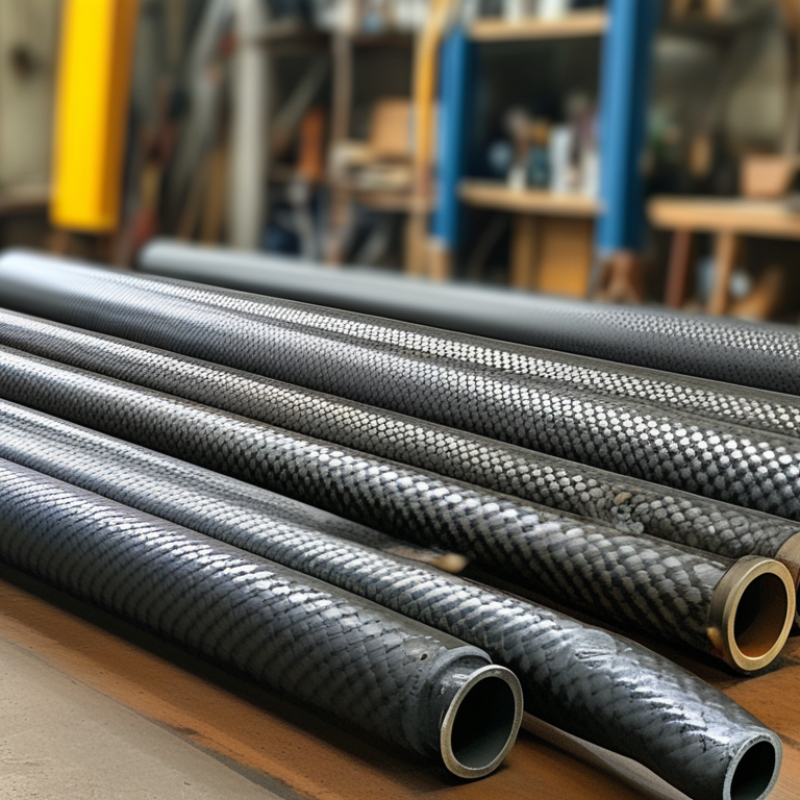
How to Choose the Best Carbon Fiber Pipe for Your Needs?
When selecting a Carbon Fiber Pipe, understanding your specific needs is crucial. Carbon fiber pipes offer an ideal blend of strength and lightweight properties. Whether you're involved in industrial applications or DIY projects, their versatility stands out.
Quality varies significantly among manufacturers. Some pipes may not meet the necessary safety standards. Do thorough research to identify reliable sources. Check reviews and ask for recommendations. A reputable supplier can ensure a long-lasting product.
Consider the dimensions and intended use of the Carbon Fiber Pipe. Certain projects may require specific sizes. It's essential to balance performance with weight. Remember that the best choice may not always be the most expensive option. Evaluate all factors carefully before making a decision.
Understanding Carbon Fiber Pipes and Their Applications
Carbon fiber pipes are increasingly popular in various industries. Their lightweight and strength make them ideal for applications in aerospace, automotive, and sporting goods. According to a report by the Global Carbon Fiber Pipe Market, the market is projected to grow at a CAGR of 8.5% between 2021 and 2028. This growth indicates significant industry recognition of carbon fiber's advantages.
In aerospace, carbon fiber pipes reduce weight while maintaining structural integrity. This is crucial as airlines seek to improve fuel efficiency. Similarly, automotive manufacturers utilize these pipes for lightweight components, enhancing performance and fuel economy. However, some industries still grapple with the high costs of carbon fiber fabrication. This can be a barrier to wider adoption, forcing companies to weigh the benefits against financial limitations.
Understanding the specific needs of a project is essential when selecting carbon fiber pipes. Evaluating factors like diameter, wall thickness, and tensile strength can aid in making informed decisions. Reports suggest that miscalculating material specifications can lead to structural failures or increased production costs. Thus, expertise in material science plays a pivotal role in the selection process.
How to Choose the Best Carbon Fiber Pipe for Your Needs?
| Property | Description | Typical Application |
| Weight | Carbon fiber pipes are lightweight compared to metal pipes. | Aerospace, automotive components. |
| Strength | High tensile strength, making them very strong for their weight. | Sports equipment, industrial machinery. |
| Corrosion Resistance | Inherently resistant to corrosion and chemical damage. | Chemical processing, marine applications. |
| Thermal Conductivity | Low thermal conductivity; good thermal insulator. | Insulation in high-temperature environments. |
| Cost | Generally more expensive than traditional materials. | High-performance situations where weight savings is critical. |
Evaluating Key Factors in Carbon Fiber Pipe Selection
When selecting a carbon fiber pipe, it’s essential to evaluate several key factors. The material's tensile strength and weight are critical. Carbon fiber boasts a tensile strength of around 600 MPa, significantly exceeding that of aluminum, which averages about 200 MPa. This strength-to-weight ratio makes carbon fiber ideal for applications requiring lightweight yet robust materials.
Another crucial factor is the type of resin used in the pipe. Different resins, such as epoxy or polyester, offer varying levels of chemical resistance and temperature tolerance. For instance, epoxy resin can withstand temperatures up to 120 °C while retaining structural integrity. Users must consider the specific environmental conditions their pipes will face.
Additionally, factors like diameter, wall thickness, and the manufacturing process influence selection. Custom fabrication may lead to higher costs but can meet specialized needs. The growing interest in carbon fiber components reflects its increasing reliability and versatility, backed by predictions that the composite materials market will reach $150 billion by 2026. However, one must reflect on the environmental impact of carbon fiber production, which still requires energy-intensive processes. Balancing performance and sustainability is crucial in making informed decisions.
Comparing Different Types of Carbon Fiber Pipes
When selecting carbon fiber pipes, it's important to understand the various types available. Different manufacturing processes lead to distinct properties. Pultruded pipes, for example, offer high strength and are commonly used in structural applications. These pipes can withstand significant loads, making them ideal for heavy-duty projects. They have a tensile strength of around 600 MPa, which varies based on fiber orientation and resin.
In contrast, filament-wound pipes excel in applications requiring high-impact resistance. These are often used in pressure vessels and are crafted using automated processes. A report by the International Composites Manufacturers Association (ICMA) highlights that filament-wound pipes can achieve strength levels over 800 MPa, depending on the fiber matrix. However, the cost of filament-wound pipes is usually higher, which can be a limiting factor for some projects.
Additionally, the choice of resin plays a crucial role. Epoxy resins provide excellent chemical resistance, while vinyl ester resins offer better flexibility. It's essential to evaluate your project's specific needs when selecting a resin type. Overlooking these details can lead to failures in performance and longevity. Understanding the subtle differences will help ensure that you select the best carbon fiber pipe for your application.
Assessing Strength, Flexibility, and Weight Considerations
When selecting a carbon fiber pipe, it's crucial to evaluate its strength, flexibility, and weight. Carbon fiber offers excellent strength-to-weight ratios. According to research from the Composites Manufacturing Association, carbon fiber can be over five times stronger than steel while being significantly lighter. This property is essential for applications in aerospace, automotive, and sports equipment, where performance is paramount.
Flexibility is another key factor. Carbon fiber pipes can exhibit different levels of stiffness depending on their construction. Some applications require high stiffness for structural integrity, while others benefit from increased flexibility for shock absorption and maneuverability. Data from the Journal of Composite Materials shows that modifying the fiber architecture can enhance flexibility without compromising strength. Achieving the right balance can be challenging and often requires careful material selection.
Weight considerations are also vital. Lightweight structures are increasingly important in design to improve efficiency. The International Journal of Lightweight Materials reveals that reducing weight by just 10% can enhance fuel efficiency by up to 5% in transport applications. However, lighter materials may compromise durability. It’s essential to weigh these factors against specific needs and intended use cases to make informed decisions.
Budgeting for Your Ideal Carbon Fiber Pipe Purchase
When budgeting for a carbon fiber pipe, consider the material's unique properties. Carbon fiber offers excellent strength-to-weight ratios. It can be up to five times stronger than steel while being significantly lighter. According to industry reports, high-quality carbon fiber pipes can range from $50 to over $200 per foot, depending on thickness and finish.
In your budget, factor in potential customization costs. Custom lengths or specialized designs often incur additional fees. For instance, bespoke engineering modifications can increase your expense by 20% to 40%. It's essential to identify your specific requirements to avoid overspending. Research shows that consumers often allocate about 30% of their total budget on unexpected design changes.
Be cautious of choosing lower-cost options. Lower-quality carbon fiber can compromise performance and safety. A report suggested that 25% of low-cost pipes failed under stress testing. Always prioritize reliability over price. Evaluate different suppliers and their reputations. Reading peer reviews can guide your decision-making process, ensuring you invest wisely in a product that meets your needs.