
China has become a major sourcing base for precision switching components, including the spdt micro switch. Global buyers now expect more than competitive pricing. They need stable contact resistance, repeatable actuation force, sealed housings, and traceable production records.
Grand View Research reports continued growth in the global microswitch market, driven by automotive systems, appliances, industrial controls, and smart equipment. MarketsandMarkets also identifies automation and vehicle electrification as important demand factors. However, market estimates differ. That gap deserves attention. Buyers should verify specifications instead of trusting attractive forecasts.
Reliability begins with defined conditions. Dr. Michael Pecht, a recognized reliability engineering expert, states, “Reliability is the probability that a product will perform its intended function for a specified period of time under specified conditions.” This principle matters when selecting an spdt micro switch for a dusty factory, a vibrating vehicle panel, or a control cabinet with millions of switching cycles.
Experienced Chinese suppliers can support custom terminals, actuator shapes, IP-rated sealing, and automated inspection. Yet supplier capability varies widely. A polished sample proves little. Global buyers should review test methods, UL or EN documentation, RoHS compliance, batch records, and failure data. Ask for the actual operating curve. Check it twice.
The strongest sourcing decision balances electrical performance, mechanical life, delivery stability, and technical communication. Small errors can create large field costs. China remains a competitive manufacturing option, but dependable results require engineering review, sample validation, and honest supplier comparison.
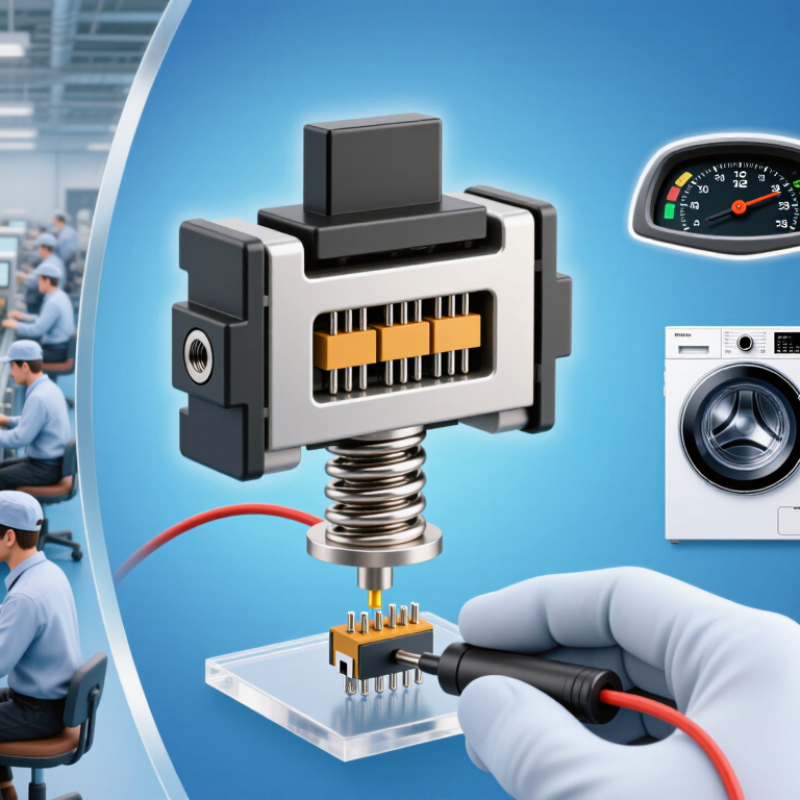
China Best SPDT Micro Switch Supplier for Global Buyers
What Is an SPDT Micro Switch?
An SPDT micro switch is a compact, snap-action device with one common terminal and two output paths. SPDT means Single Pole, Double Throw. When the actuator moves, the common contact changes from normally closed to normally open. The mechanism is small, but its timing is precise. You can hear a sharp click when the contacts transfer.
In practical equipment, an SPDT micro switch detects a door position, lever movement, or travel limit. Its contacts can control two different circuit states. For example, one path may stop a motor, while the other sends a position signal. Datasheets should show contact arrangement, operating force, travel, and electrical life. Do not judge quality by housing size alone.
Industry reports show why these components remain relevant. A 2024 market assessment from Grand View Research valued the global switches market at several billion U.S. dollars, with steady growth expected through 2030. Reports from MarketsandMarkets also identify automation and transportation equipment as important demand areas. These figures cover many switch types, not SPDT units alone. That distinction matters.
From field inspection experience, failures often begin with poor sealing, excessive actuator force, or unstable soldering. IP protection, temperature range, and load type need careful checking. A switch rated for resistance load may perform differently with an inductive motor. IEC 61058-1 provides useful safety guidance, but it does not replace application testing. One assumption can still be wrong. Testing the real load remains necessary.
An SPDT micro switch has one common terminal and two switched terminals: normally closed (NC) and normally open (NO). At rest, COM is connected to NC; when the actuator is pressed, the contact changes over and COM connects to NO.
An SPDT micro switch changes one common circuit between two output paths. It has three terminals: common, normally open, and normally closed. When the actuator moves, the internal contact shifts from one path to the other. That change lets one small switch control different operating states. It is mechanical.
Inside the housing, a spring-loaded contact responds to a plunger, lever, or roller. The actuator movement may be tiny, but the electrical result is clear. Small travel matters. In a door interlock, the switch confirms whether a panel is shut. In appliances, it can detect a lid, button, or sliding mechanism. Control panels also use SPDT switches for position feedback and mode selection. Their compact size suits crowded assemblies.
For global buyers, performance depends on more than terminal layout. Check contact ratings, operating force, travel, cycle life, and temperature limits. Request dimensional drawings and sample testing before volume orders. A switch can look perfect and still fail under vibration. I once overlooked actuator alignment during a prototype review; the electrical test passed, but the mechanism felt inconsistent. That mistake remains useful. Buyers should inspect mounting tolerance, terminal strength, and switching sound. Certification documents should match the destination market and application. A reliable supplier explains these details clearly and records test results.
When comparing a global SPDT micro switch supplier, start with the electrical specifications. Check the switching arrangement, rated voltage, current, and load type. A switch rated for resistive loads may perform poorly with motor loads. Contact resistance should remain low and stable during testing. Also review insulation resistance and dielectric strength. These figures reveal how the switch may behave in compact control equipment.
Mechanical data deserves equal attention. Compare operating force, release force, travel, and overtravel. A small difference can affect button feel and assembly alignment. Ask for life-cycle test conditions, not only a cycle number. Temperature range, terminal style, sealing level, and housing material also matter. In my sourcing experience, supplier samples often feel excellent, yet production batches vary slightly. That gap requires inspection records, batch traceability, and clear tolerance limits. A perfect datasheet does not guarantee consistent delivery.
Tips: Request samples from several suppliers and test them under your real voltage, current, temperature, and mounting conditions. Check test reports, quality certificates, and inspection procedures. Confirm packaging, lead time, minimum order quantity, and replacement handling before approval. Do not compare price alone. One overlooked parameter can increase field failures and rework. Personally, I still leave room for doubt and repeat critical tests, because early assumptions are often wrong.
China has become a major SPDT micro switch manufacturing hub because its supply chain is unusually complete. Mold makers, spring suppliers, stamping workshops, and electronics assemblers often operate within the same industrial region. This shortens development time and reduces coordination problems. In practical sourcing, buyers can request samples, adjust actuator force, and review terminal layouts without changing suppliers. Large production capacity also supports stable pricing for automotive controls, appliances, access devices, and industrial panels.
Experienced Chinese manufacturers usually provide tooling support, electrical testing, and inspection records for each production batch. Reliable suppliers can discuss contact resistance, insulation performance, operating temperature, and mechanical life with clear data. Buyers should still verify test methods against the required application and relevant standards. A low quoted price may hide weaker springs or inconsistent plating. That risk is real. Factory visits, sample testing, and pilot orders remain valuable, even when communication seems smooth.
Tips: Ask for a complete datasheet, sample approval, and batch inspection plan. Check the switch under real load, not only by hand. Confirm packaging details, because bent terminals can create costly assembly delays. Keep written records of every design change. Small omissions matter.
| Data Dimension | Typical or Verified Information | Why It Matters to Global Buyers |
|---|---|---|
| Product Definition | SPDT means “single-pole, double-throw.” One common terminal is switched between two output terminals, allowing the switch to provide normally open and normally closed functions. | Suitable for control panels, appliances, automotive equipment, security devices, industrial controls, and position-detection systems. |
| Common Contact Configuration | Typical configurations include 3 terminals, solder terminals, quick-connect terminals, or PCB terminals. The exact terminal arrangement depends on the product design. | Buyers can select a mounting and wiring format that matches an existing circuit or assembly process. |
| Electrical Ratings | Micro switches are available in different AC and DC voltage/current ratings. Common product ranges include low-current signal versions and higher-rated versions around 5 A to 16 A, depending on the model and applicable standard. | The rating must be matched to the actual load, inrush current, voltage, switching frequency, and safety requirements. |
| Mechanical Life | A typical SPDT micro switch may be specified for approximately 100,000 to 1,000,000 mechanical operations. Actual life varies with construction, actuator type, load, and environmental conditions. | Useful for comparing durability in repetitive applications such as doors, levers, printers, vending equipment, and industrial machinery. |
| Actuator Options | Common options include hinge levers, roller levers, simulated roller levers, plungers, long levers, and custom actuator shapes. | Different actuators help control operating force, travel, release position, and compatibility with the customer’s mechanism. |
| Operating Force and Travel | Typical designs offer operating forces from a few hundred millinewtons to several newtons, with short differential travel. Exact values are model-specific and should be confirmed on the technical drawing. | Correct force and travel improve actuation reliability and reduce mechanical stress in the finished product. |
| Contact Resistance | Many miniature switch designs specify initial contact resistance at or below approximately 100 milliohms, although the limit depends on the construction and test method. | Lower and stable contact resistance supports dependable signal transmission and helps limit heat generation. |
| Temperature Range | Common operating-temperature specifications range from approximately −25°C to +85°C. Specialized designs may support wider ranges, such as −40°C to +125°C. | Temperature capability is important for outdoor equipment, automotive systems, heating appliances, and industrial environments. |
| Manufacturing Supply Chain | China has established supply networks for stamped metal parts, injection-molded housings, springs, terminals, contact materials, tooling, plating, assembly, and packaging. | A concentrated supply chain can shorten coordination cycles and support integrated production from tooling to final assembly. |
| Customization Capability | Available customization may include terminal layout, actuator length, mounting holes, housing dimensions, contact materials, wire leads, seals, packaging, and electrical ratings. | Customization helps global buyers adapt a standard switch platform to product-specific mechanical and electrical requirements. |
| Quality and Compliance | Relevant requirements may include IEC 61058-1 for switches for appliances, RoHS substance restrictions, REACH chemical requirements, and market-specific safety approvals where applicable. | Compliance documents, test reports, traceability records, and production inspections help buyers qualify components for international markets. |
| Production Technology | Typical production processes include progressive stamping, precision injection molding, automated or semi-automated assembly, contact riveting, plating, electrical testing, and life-cycle testing. | Process integration can improve dimensional consistency and support repeat orders at commercial production volumes. |
| Export and Logistics | China has extensive manufacturing-export infrastructure, including container ports, international air freight, express delivery, contract logistics, and packaging suppliers. | Established logistics options support regular replenishment, samples, project shipments, and multi-country distribution. |
| Buyer Verification Checklist | Confirm the datasheet, terminal diagram, electrical rating, operating force, travel, life test conditions, temperature range, material declarations, inspection plan, and sample approval before mass production. | Technical verification reduces the risk of contact failure, incorrect fit, premature wear, and non-compliance in the target market. |
Note: Electrical ratings, life expectancy, operating force, dimensions, and environmental performance are model-specific. Buyers should verify all values against the selected product’s official datasheet and test conditions.
China Best SPDT Micro Switch Supplier for Global Buyers
Selecting a reliable China supplier begins with evidence, not polished photographs. Request samples from the same production line used for mass orders. Check switching force, travel, contact resistance, insulation resistance, and mechanical life. IEC 61058-1 provides useful safety and performance guidance for switches used in appliances. However, compliance alone does not prove stable production.
Ask for a dated test report, calibration records, material declarations, and batch traceability. A capable supplier should explain terminal plating, housing material, sealing options, and tolerance control clearly. ISO 9001 certification is helpful, but it cannot replace process audits or sample verification. Inspect incoming materials, assembly stations, and final inspection records when possible. Small details matter. Missing serial records can become expensive later.
International delivery also requires practical judgment. UNCTAD’s Review of Maritime Transport reports that over 80% of global merchandise trade by volume moves by sea. Therefore, confirm packaging strength, moisture protection, carton labeling, and backup shipping plans. The World Bank’s 2023 Logistics Performance Index evaluates customs, infrastructure, shipment reliability, tracking, and timeliness. Use these areas when assessing the supplier’s export capability. I would still avoid trusting a single successful sample. Product specifications may change quietly. A second audit, independent testing, or pilot order can reveal weaknesses before full production. Teams sometimes overfocus on unit price and undercount inspection, delay, and replacement costs. That mistake remains common.