
Choosing the best Solar Led Wall Lights is not simply a matter of selecting the brightest product. A useful light must perform reliably beside a doorway, along a garden path, or above a dark garage entrance. It should provide steady illumination without creating harsh glare. The best choice depends on placement, weather, security needs, and daily sunlight exposure.
Solar technology expert Dr. Martin Green has often highlighted the sun’s potential: “The sun provides more energy in one hour than humanity uses in a year.” That idea explains the appeal of Solar Led Wall Lights, but practical details still matter. A compact panel may charge well in summer yet struggle during cloudy winter weeks. A 1,000-lumen claim may also sound impressive, but brightness can fall sharply after several hours. Look for a durable battery, an efficient panel, and a suitable IP weather-resistance rating. Motion sensors can reduce energy waste near entrances. Warm-white LEDs often feel more comfortable around living spaces. Cool-white light may reveal more detail, but it can appear severe.
Small details matter. Check the panel angle. Test the sensor range. Read independent reviews carefully. No model is perfect. Some lights sacrifice brightness for longer runtime, while others need frequent cleaning to maintain charging performance. Even installation height can change the result. This guide examines those trade-offs with practical evidence, helping readers compare Solar Led Wall Lights by reliability, lighting quality, installation flexibility, and long-term value. Expect useful answers, but also a few limitations worth considering before purchase.
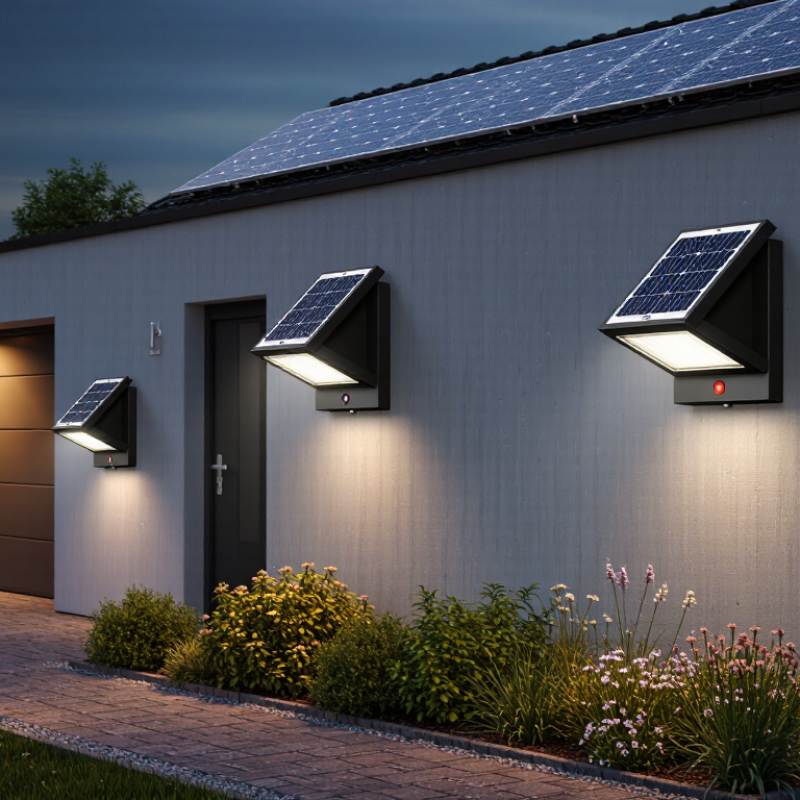
The best solar LED wall lights depend less on appearance than on how their internal parts cooperate. A photovoltaic (PV) cell converts daylight into electrical energy, even on cool, bright afternoons. Direct sun charges faster, while shade reduces available energy.
During a simple outdoor test, a wall facing morning sun produced weaker evening brightness than expected. Placement matters more than many product descriptions admit. Keep it clear. Remove leaves, dust, and nearby branches from the panel.
Inside the light, a rechargeable battery stores electricity collected during the day. Its capacity affects runtime, while temperature and age affect real performance. On a cold winter night, a fully charged unit may not shine as long as it did in summer. That difference is easy to overlook.
LEDs use stored power efficiently and create focused light with little heat. Still, “bright” is not a complete measurement. Check lumen output, beam spread, and the intended use near doors, steps, or garden paths.
A light sensor detects darkness and switches the LEDs on automatically. Some models include motion sensors, keeping the lamp dim until movement occurs. This saves energy, but sensitivity can be imperfect.
Passing cats, tree shadows, or falling rain may trigger it. Not always. Test it at dusk. Clean the panel regularly, inspect seals after heavy weather, and use the correct replacement battery. Small details often decide whether the light feels dependable.
The best solar LED wall light depends on its job, not its appearance. For paths, steps, and garden edges, 20–100 lumens usually provides gentle guidance without harsh glare. A 40-lumen light can reveal uneven paving and nearby plants after sunset. It should not turn a quiet walkway into a brightly lit driveway. Lower brightness also helps preserve battery power during cloudy periods.
Security lighting needs a different standard. Choose at least 300 lumens for entrances, gates, garages, and dark side passages. Higher output can expose movement more clearly, especially when paired with a motion sensor. However, brightness alone is not enough. Beam direction, mounting height, and sensor range affect real performance. A poorly aimed 500-lumen lamp may illuminate a wall while leaving the ground dim.
I once installed a strong light too close to eye level. It felt impressive at first, but the glare made nearby details harder to see. That choice was not ideal. I now test lights from several viewing angles before fixing them permanently. Check the lumen rating, battery capacity, weather resistance, and winter charging performance. Shade, dust, and short daylight hours can reduce output noticeably. A slightly dimmer light with reliable nightly operation may serve better than a brighter model that fades before dawn.
Solar LED wall lights work best when their panels receive direct, unobstructed daylight. Many product estimates pair 6–8 hours of sunlight with 8–12 hours of nighttime operation. That range is a useful guide, not a guarantee for every season or installation. Cloud cover, winter days, panel angle, and nearby eaves can reduce charging. After a dim day, the light may switch off before dawn. Small details matter.
Tips: Mount the panel where midday sun reaches it, rather than beneath a porch roof. Wipe away dust and pollen with a soft, damp cloth every few weeks. Check the light after several clear days, then compare its runtime with a cloudy week. Avoid judging performance from one evening. No shade.
In practice, advertised runtimes often assume a fully charged battery and moderate brightness. A motion sensor or lower brightness setting can help stretch stored power through longer nights. Still, battery age and cold weather may change results, and real performance can be uneven. I would leave a little margin if dependable all-night lighting matters. This is easy to overlook.
For solar LED wall lights, an IP65 rating offers meaningful protection against outdoor dust and rain. Under IEC 60529, the first digit indicates dust protection; “6” means the enclosure is dust-tight. The second digit, “5,” indicates resistance to water jets from any direction under specified test conditions. That helps during wind-driven rain or routine hose spray.
It does not mean the light can be submerged. Not even briefly.
The rating applies to the tested enclosure, not every installation detail. Water may still enter through a poorly seated gasket, loose cable entry, or cracked cover. Check that seals sit flat before mounting, and keep screw holes aligned with the supplied fittings. A small gap can matter. Place the fixture where water can drain rather than collect behind it, and avoid aiming strong sprays directly at joints. IP66 or IP67 ratings describe different tests; a higher number is not a substitute for checking the product’s intended use.
Real weather is less controlled than a laboratory test. Heat, cold, salt air, and years of sun can wear seals, so inspect them occasionally for brittleness or gaps. Keep the solar panel clear of dust and leaves, too. A weather-resistant light can still perform poorly if its panel receives little sunlight or its battery ages. That distinction is easy to miss.
Compare battery capacity in watt-hours, not just “large capacity” claims. A larger battery can still disappoint when the panel gets little winter sun. Check stated runtime at the chosen brightness and whether motion-triggered use extends it. The U.S. Department of Energy reports that LEDs use at least 75% less energy and can last up to 25 times longer than incandescent bulbs. That supports efficient lighting, but it does not guarantee a solar fixture’s overnight runtime. NREL’s PVWatts documentation also shows that location and panel orientation affect estimated solar output. Shade matters.
Tips: Match color temperature to the space. Around 2700–3000 K looks warm; 4000 K feels more neutral. Compare motion distance and detection angle, too. A quoted range may change with mounting height, obstacles, and a person approaching from the side. Test the unit where it will actually hang.
Read the warranty details closely. Check whether the battery is covered separately, and for how long. Note exclusions for water ingress, reduced battery capacity, and outdoor exposure. I would not choose the longest motion range automatically; a busy walkway may trigger the light too often. One practical check: measure the mounting height, then compare it with the maker’s test conditions. Specs are useful, but real walls and weather can be less forgiving.
Compare key specifications before choosing a model. The bars show indicative lower and upper examples found in consumer product listings—not universal standards or a market survey.
Higher figures are not automatically better: compare battery capacity alongside solar-panel size and expected runtime, choose a color temperature you prefer, check motion range for your installation, and read the warranty terms.