



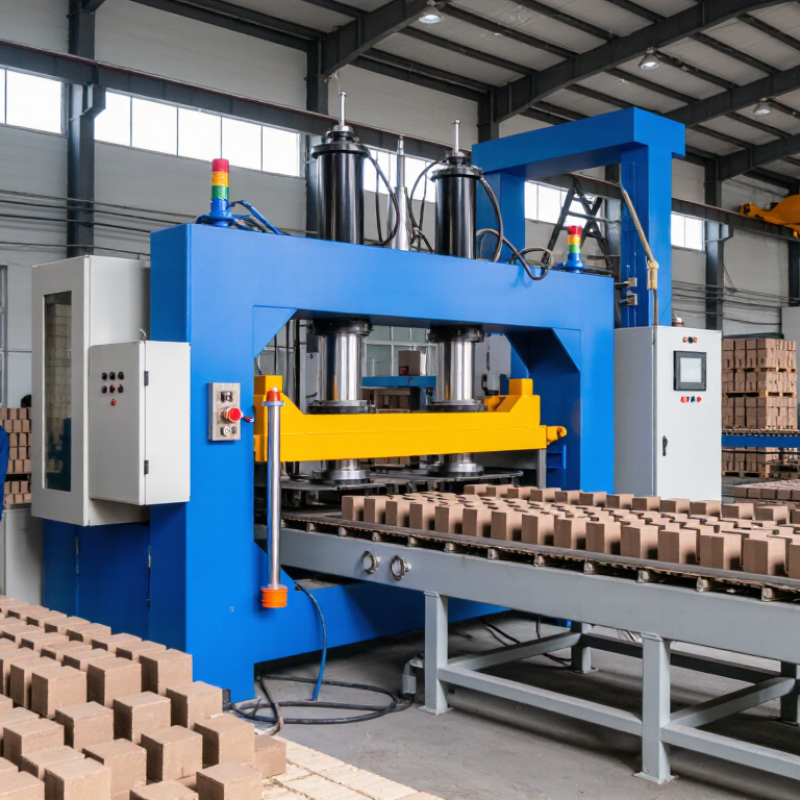
What Is the Best Mud Bricks Machine in China?
A reliable mud brick machine should pass three technical checks: moisture, pressure, and mold accuracy. CRATerre’s compressed earth block guidance shows that soil behavior changes sharply with water content. For many soil mixes, 8–12% moisture is a practical starting range. However, this is not a universal recipe. Clay percentage, sand grading, and stabilizer content can shift the target.
Moisture must be tested, not guessed by hand. Oven-dry testing provides better control than a simple squeeze test. The forming system should also maintain 10–25 MPa pressure across repeated cycles. This figure describes compaction pressure, not final block strength.
UN-Habitat technical guidance recommends local soil testing before production. A pressure gauge needs regular calibration. Small errors become visible quickly.
Mold accuracy matters more than many buyers expect. A 0.5 mm dimensional error can create uneven joints and unstable stacking. Check mold length, width, and corner squareness with calibrated tools. Inspect the first blocks after every mold adjustment. A clean machine can still produce weak bricks. That is the uncomfortable part.
Operators should record moisture, pressure, cycle time, and block dimensions. Records reveal patterns that visual inspection misses. The best selection is not the machine with the highest pressure. It is the machine that holds stable settings during ordinary production, not only during a factory demonstration.