The Best 5 Autonomous Security Drones for Enhanced Safety and Surveillance
In today's world, safety and surveillance are paramount. An autonomous security drone offers advanced solutions for protecting property and ensuring public safety. These drones come equipped with sophisticated technology. They can navigate challenging environments and gather crucial intelligence. Their ability to operate independently sets them apart from traditional security methods.
The landscape of security is evolving rapidly. Autonomous security drones are at the forefront of this change. They provide real-time monitoring and rapid response capabilities. For businesses and homeowners alike, these drones represent a smart investment in security. However, relying solely on technology isn’t without challenges.
While these drones enhance safety, they also raise questions. Users must consider privacy and operational limitations. Drones can malfunction or miss critical events. Awareness of these potential drawbacks is essential. A balanced approach to security—integrating human oversight with drone technology—can yield the best results. As we explore the best options available, understanding both the benefits and limitations of autonomous security drones is vital.
Overview of Autonomous Security Drones
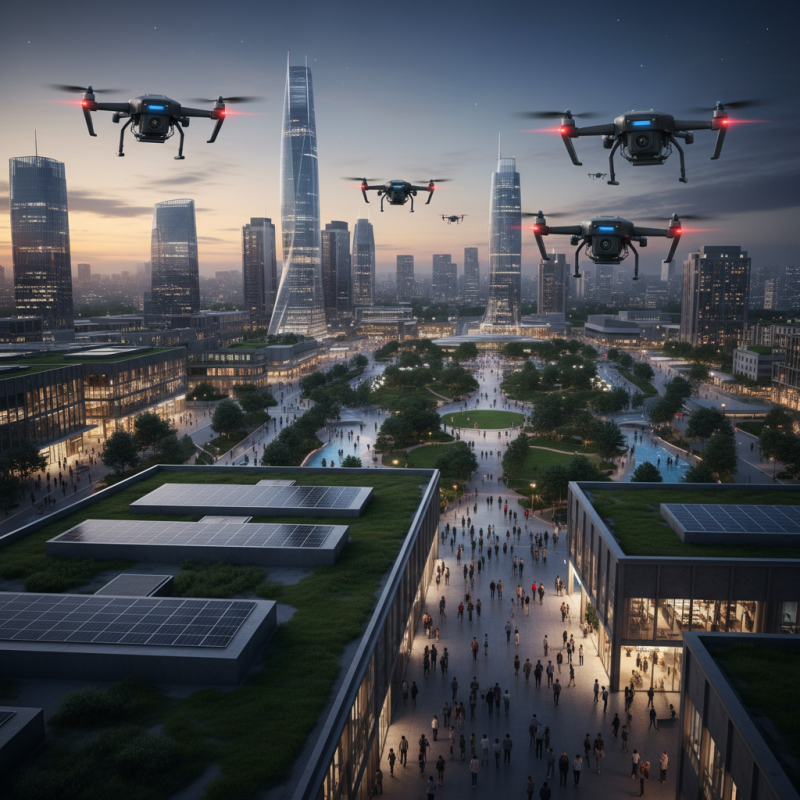
Autonomous security drones are revolutionizing surveillance operations. These advanced devices operate without human intervention, using artificial intelligence to detect threats. Equipped with high-resolution cameras and thermal imaging, drones can monitor large areas effectively. They provide real-time video feeds, allowing for quick assessment of potential risks.
The technology isn’t flawless. Environmental factors can affect performance. Weather conditions like rain or fog may hinder visibility. Drones may also face challenges in recognizing movement accurately. Despite these limitations, their role in enhancing safety is undeniable. Increasingly, security teams rely on drones for efficient patrolling. They can cover ground more extensively than a single guard, making them a valuable asset.
As security demands grow, so does interest in autonomous drones. Their ability to function autonomously can complement human efforts. However, there are ethical considerations. The balance between surveillance and privacy remains a critical conversation. It's essential to ensure that the deployment of drones respects personal space while maintaining safety.
The Best 5 Autonomous Security Drones for Enhanced Safety and Surveillance
| Model |
Flight Time |
Range |
Camera Resolution |
Weight |
Special Features |
| Model A |
30 minutes |
5 km |
4K |
1.5 kg |
Obstacle Avoidance |
| Model B |
40 minutes |
7 km |
1080p |
1.2 kg |
Live Streaming |
| Model C |
25 minutes |
3 km |
2K |
1.8 kg |
Thermal Imaging |
| Model D |
35 minutes |
6 km |
4K |
1.6 kg |
Auto Return Home |
| Model E |
45 minutes |
10 km |
1080p |
1.4 kg |
AI Tracking |
Key Features to Consider in Security Drones
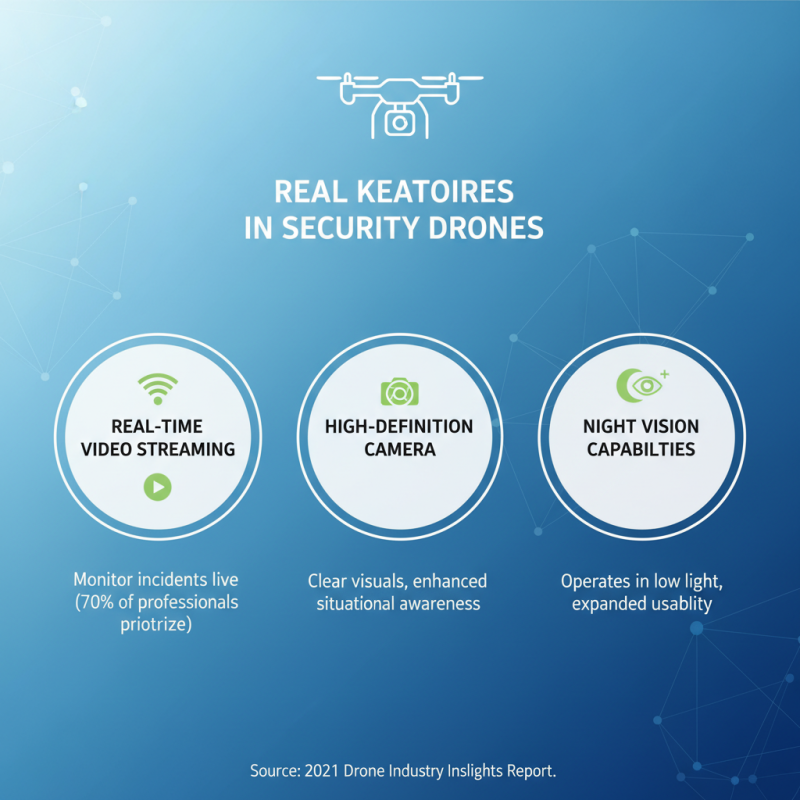
When selecting an autonomous security drone, various key features play a crucial role in enhancing safety and surveillance. First, the capability of real-time video streaming is essential. According to the 2021 Drone Industry Insights report, over 70% of security professionals prioritizing live video access to monitor incidents as they happen. High-definition cameras with night vision capabilities further improve situational awareness. Permitting the drone to operate effectively in various lighting conditions expands its usability.
Another important feature is autonomous flight planning. Drones equipped with AI-driven technology can adapt to changing environments. A study by the Federal Aviation Administration reported that autonomous drones significantly reduce response times in emergencies. This enhances their effectiveness in areas like perimeter surveillance or crowd monitoring.
Endurance is also critical. Battery life determines how long a drone can patrol without needing a recharge. The Drone Market Forecast highlights that new models are achieving flight times exceeding 50 minutes, representing a significant improvement. However, many drones still struggle with unpredictable weather conditions and may not perform optimally in harsh climates. This adds to the necessity for ongoing development and evaluation of capabilities in real-world scenarios.
Top 5 Autonomous Security Drones Reviewed
In recent years, the use of autonomous security drones has surged, driven by the need for enhanced safety and surveillance. A report from MarketsandMarkets indicates the global drone security market is expected to reach $5.61 billion by 2026. This highlights a growing recognition of drones' capabilities in monitoring and protecting assets.
These drones come equipped with advanced features like thermal imaging and real-time data transmission. They can cover large areas quickly, reducing the time between identifying a threat and responding to it. A survey conducted by the Drone Industry Association revealed that 70% of security professionals believe drones enhance their ability to monitor vast outdoor areas effectively.
However, challenges remain. Issues of privacy and battery life need constant attention. Some drones may not operate effectively in all weather conditions. The complexity of drone technology can lead to a steep learning curve for new users. As security needs evolve, so too must the technology that safeguards them. This ongoing balance between innovation and practicality shapes the future of surveillance.
Comparative Analysis of Performance and Pricing
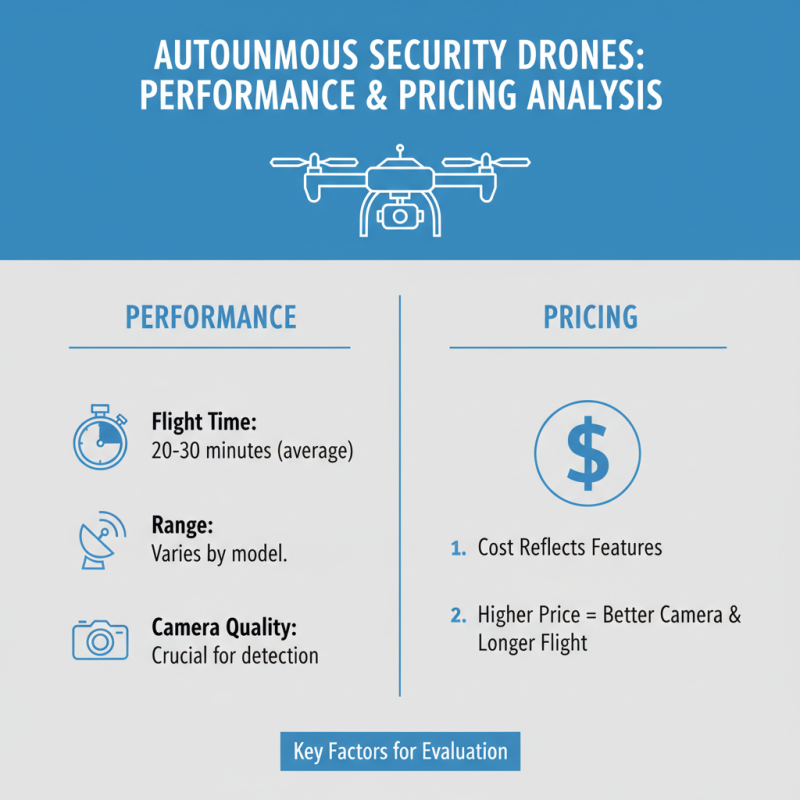
When evaluating autonomous security drones, performance and pricing are critical aspects. The flight time, range, and camera quality play vital roles in their effectiveness. Most drones can operate for 20 to 30 minutes before needing a recharge. Importantly, the cost typically reflects these features. Higher-priced models often offer superior cameras and extended flight times.
As you assess options, consider how your specific needs align with these features. If you require around-the-clock surveillance, investing in longer battery life is wise. Cheaper drones may have limitations, such as lower image quality or less effective sensors. These aspects can significantly affect your security provisions.
Tips: Look for models that provide real-time video feeds. This can enhance situational awareness. Additionally, check if integration with other security systems is possible. Such connectivity can streamline your operations. Always read customer reviews to gain insights into real-world performance. Balancing these factors is crucial. Achieving the right combination of performance and price can be challenging but rewarding in securing your premises efficiently.
Future Trends in Autonomous Drone Technology for Surveillance
The future of autonomous drone technology is evolving rapidly. Drones equipped with advanced sensors can perform real-time surveillance efficiently. They are revolutionizing security systems across various sectors. With features like facial recognition and obstacle avoidance, these drones can navigate complex environments. Such capability enhances their effectiveness in monitoring large areas.
As AI technology improves, drones will integrate better with existing security infrastructures. The potential for real-time data analysis is immense. Drones could automatically alert security personnel of unusual activities. This shift will require careful consideration. Issues like privacy and data protection must be addressed. As drones become more autonomous, the need for ethical guidelines grows.
Additionally, the use of drones in surveillance raises questions. They may not always distinguish between normal and suspicious behavior. This could lead to false alarms or oversight. Enhancing these systems requires ongoing research and feedback. By acknowledging their limitations, we can foster development while ensuring public trust.
The Best 5 Autonomous Security Drones for Enhanced Safety and Surveillance
This chart illustrates the ratings of the top five autonomous security drones based on various features important for safety and surveillance, showcasing their performance in a comparative manner.