How to Choose the Best UAV Drone for Your Needs and Budget
The burgeoning market for UAV drones continues to transform various industries, from agriculture to aerial photography, and even logistics. According to a recent report by the Federal Aviation Administration (FAA), the number of registered drones in the United States alone has surpassed 1.7 million, indicating a growing interest and investment in UAV technology. This upward trend correlates with the broader global drone market, which is projected to reach approximately $42 billion by 2025, highlighting the increasing integration of UAV drones into everyday applications.
Choosing the best UAV drone that fits your specific needs and budget is essential for maximizing the benefits it can offer. As you navigate the myriad options available, understanding the various types of UAV drones, their capabilities, and intended uses will enable you to make an informed decision. Whether you seek a drone for recreational use, industrial applications, or professional aerial services, assessing technical specifications and user reviews can provide valuable insights. This decision-making process not only involves comparing features but also ensuring that the chosen UAV drone aligns with your operational goals and financial constraints. With the right approach, you can effectively harness the potential of UAV drones to enhance productivity and creativity in your endeavors.

Understanding Different Types of UAV Drones and Their Uses
When selecting the best UAV drone for your needs, it’s essential to understand the different types of UAV drones and their specific applications. Drones can generally be categorized into three main types: fixed-wing drones, multi-rotor drones, and hybrid drones. Fixed-wing drones are ideal for long-range missions, offering extended flight times and the capability to cover large areas, making them popular in agricultural surveys and mapping. According to a report by the Federal Aviation Administration (FAA), fixed-wing UAVs are increasingly being used for agricultural monitoring, with a projected growth in the drone agriculture market expected to reach $1.5 billion by 2025.
Multi-rotor drones, on the other hand, provide exceptional maneuverability and stability, suited for short-range operations. They are widely utilized in urban environments for applications such as search and rescue, aerial photography, and inspections of infrastructure. A study from the Association for Unmanned Vehicle Systems International (AUVSI) noted that the demand for multi-rotor UAVs has surged, particularly in the construction and real estate sectors, with a growth forecast of over 19% annually through 2026. Lastly, hybrid drones combine the benefits of fixed-wing and multi-rotor designs, enabling versatile functionality for various tasks, such as delivering medical supplies in remote areas or conducting surveillance. Understanding these distinctions will help prospective buyers make informed decisions based on their specific operational needs and budget constraints.
How to Choose the Best UAV Drone for Your Needs and Budget
| Type of UAV Drone |
Typical Uses |
Price Range |
Flight Time |
Camera Quality |
| Photography Drone |
Aerial photography and videography |
$300 - $2,500 |
20 - 30 minutes |
4K resolution |
| Racing Drone |
Drone racing competitions |
$200 - $1,500 |
5 - 10 minutes |
FPV camera (varied quality) |
| Agricultural Drone |
Crop monitoring and analysis |
$1,000 - $25,000 |
15 - 30 minutes |
Varies by model |
| Surveying Drone |
Land surveying, mining, and mapping |
$1,500 - $20,000 |
20 - 40 minutes |
High-resolution camera |
| Delivery Drone |
Package delivery and logistics |
$2,000 - $10,000 |
25 - 60 minutes |
Integrated delivery system |
Evaluating Your Specific Needs and Intended Applications
When selecting the best UAV drone for your needs, the first step is to thoroughly evaluate your specific requirements and intended applications. Begin by identifying the primary purpose for which you will use the drone. Are you looking to capture high-quality aerial photography, conduct surveys, or perhaps inspect infrastructure? Each application has unique demands, and understanding these will guide your selection process. For instance, a drone designed for capturing stunning images will differ significantly from one tailored for mapping or agricultural analysis.
Additionally, consider the environment in which the drone will operate. If you need a drone for indoor use or limited spaces, a compact and maneuverable model would be essential. Conversely, for outdoor applications, factors such as wind resistance, battery life, and range become critical considerations. Furthermore, assessing your budget constraints is vital. While it may be tempting to opt for the most advanced drone, prioritizing features that align with your specific applications will ensure that you make the most informed purchase that meets your needs without overspending.
Choosing the Best UAV Drone for Your Needs and Budget
Setting a Realistic Budget: Costs of UAV Drones and Accessories
Setting a realistic budget for UAV drones and their accessories is essential for both novice and experienced users. The costs associated with drones can vary significantly based on their intended use, specifications, and features. For instance, consumer drones designed for photography or videography typically range from a few hundred to several thousand dollars. On the other hand, specialized drones used for agricultural, surveying, or industrial applications can command even higher prices due to advanced capabilities and technology.
In addition to the drone itself, it’s crucial to factor in costs for necessary accessories that enhance functionality and user experience. Batteries, propellers, and carrying cases are just a few examples of items that require additional investment. Depending on your intended usage, you might also consider purchasing software for post-processing images or data analysis. By thoroughly assessing your requirements and aligning them with your budget, you can make informed decisions that will lead to a satisfying drone experience without overspending.
Key Features to Consider When Selecting a UAV Drone
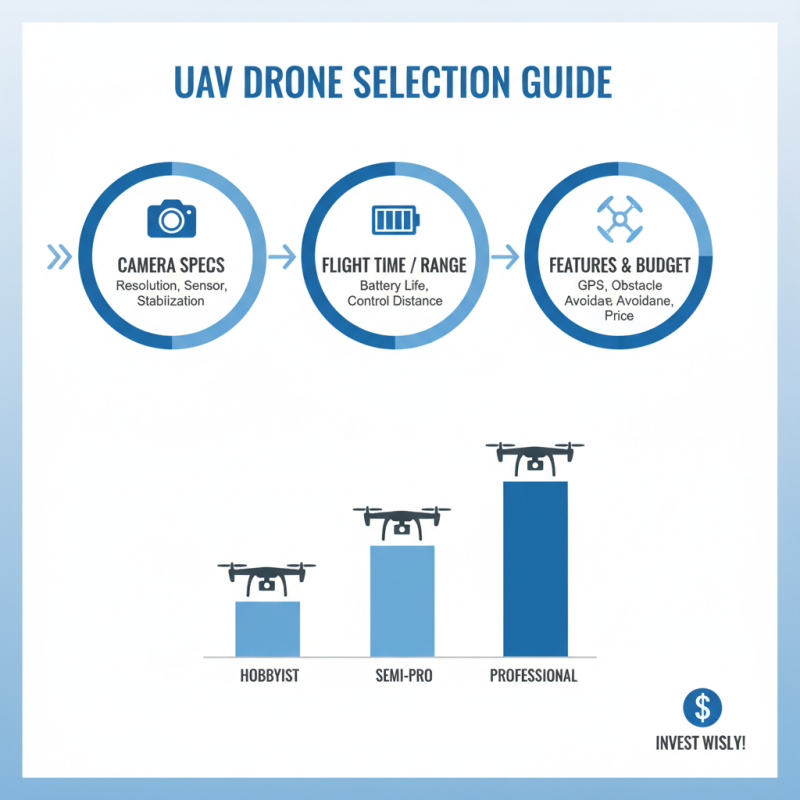
When selecting a UAV drone, several key features warrant careful consideration to ensure you choose the best model for your specific needs and budget. First, it's essential to look at the camera specifications if aerial photography or videography is on your radar. The resolution, sensor quality, and stabilization technology can significantly impact the outcome of your imagery, so opting for a drone with higher quality optics can yield impressive results.
Another critical factor is battery life and flight time. Drones with longer flight times enhance usability, especially for applications like surveying or search-and-rescue operations, where extended periods in the air are beneficial. Additionally, consider the range and control capabilities; drones that can be operated at greater distances provide flexibility in various operational environments. Finally, examine the drone's stability, ease of use, and any extra features like obstacle avoidance systems, which can enhance safety and make flying easier, especially for beginners.
Comparing Top UAV Drone Models Within Your Budget Range
When comparing top UAV drone models within your budget range, it’s essential to identify your primary needs—whether for recreational flying, aerial photography, or professional applications.
Different drones cater to varying requirements, from flight time and camera quality to ease of use and durability.
For instance, those seeking high-quality aerial imagery should prioritize models with superior camera specifications and stabilization features, while beginners might benefit more from user-friendly drones that offer intuitive controls and beginner modes.
Additionally, budget constraints play a significant role in selecting the right UAV.
Entry-level models often provide essential features at an affordable price, making them perfect for newcomers. However, for users looking for advanced functionalities like obstacle avoidance or high-definition video capabilities,
it may be worthwhile to stretch your budget slightly into the mid-range options.
By weighing the must-have features against available models, you can efficiently narrow down your options and find a UAV drone that not only fits your financial plan but also meets your specific use-case requirements.