In the rapidly evolving landscape of construction, the role of construction drones has become increasingly vital. John Smith, a leading expert in construction technology, aptly states, “Drones are revolutionizing how we approach site monitoring and data collection.” This transformation is reshaping project management, making tasks more efficient and accurate.
Construction drones offer a multitude of benefits that enhance productivity and safety on job sites. These aerial devices can survey large areas in minutes, providing real-time data that was once painstakingly gathered over days. Yet, as remarkable as this technology is, there are challenges that need addressing. Issues such as data accuracy and the need for skilled operators can complicate their use. The integration of drones into traditional workflows requires careful consideration.
Despite these drawbacks, the advantages of construction drones cannot be overlooked. They improve decision-making, reduce costs, and enhance project timelines. However, firms must continuously assess the implications of adopting such technology. Balancing innovation with practical application remains a crucial task in the construction industry today.
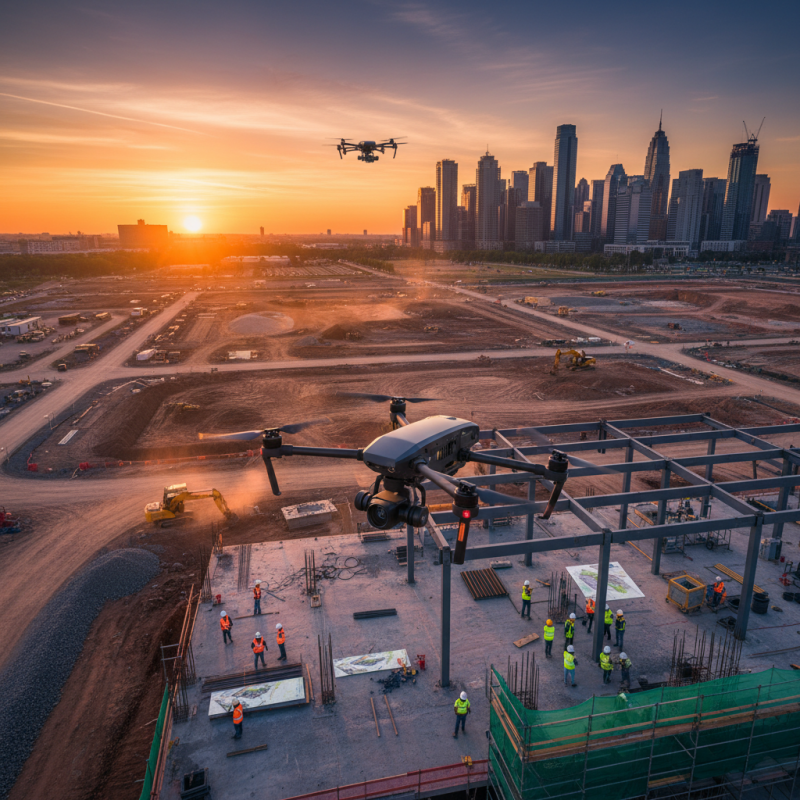
Drones are revolutionizing site surveying in construction. They provide precise, real-time data that can dramatically enhance accuracy. Aerial imagery captures the site from multiple angles. This information helps project managers make informed decisions quickly. Traditional methods often lead to errors. Drones minimize these risks.
With drones, surveying large areas becomes efficient. A flyover can collect millions of data points in minutes. This is something manual surveys can’t match. However, using drones requires careful planning. They must be programmed correctly. Missteps in flight paths can lead to incomplete data. On occasion, adverse weather can disrupt operations.
Another challenge is interpreting the collected data. Advanced software is essential for analysis. Still, learning how to use these tools can be daunting. Teams may need additional training. Despite these hurdles, the benefits of drones are significant. Accurate site surveys save time and money.
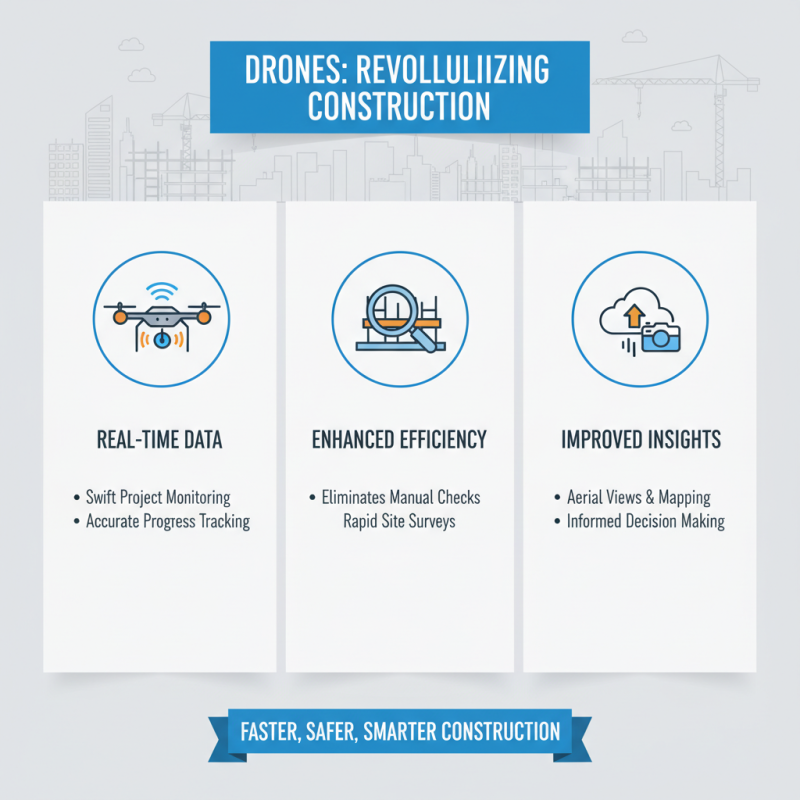
Drones have transformed construction projects significantly. They provide real-time aerial imagery, which helps in monitoring progress. This visual data can quickly identify delays or potential issues, allowing teams to address them promptly. For instance, a drone can survey a site in minutes, giving insights that might take hours to gather on foot.
Cost efficiency is another crucial benefit. Utilizing drones reduces the need for extensive manpower and equipment for site surveys. This can cut labor costs and minimize project timelines. However, drones require initial investment and training. Teams must adapt to this new technology, which can lead to a steep learning curve. Navigating software for data analysis can be challenging.
Time management also improves with drones. They can capture site conditions from various angles, ensuring accuracy in planning and execution. Accurate assessments lead to better resource allocation. Yet, not all teams fully utilize the insights drones offer. Some may rely on traditional methods, which can negate the advantages of this technology. Balancing innovation with existing practices can be a tough but necessary task.
Drones have transformed the construction industry. Their ability to gather real-time data is revolutionary. Teams can now monitor project progress swiftly and accurately. This technology eliminates the guesswork often associated with manual checks. A simple drone flight can cover vast areas in minutes. A few images from above can reveal much more than a report.
Additionally, the use of drones can highlight issues early on. If a construction site shows delays, drones can provide the needed oversight. Workers can adjust their pace, ensuring efficiency remains high. However, relying solely on drones has its limits. Weather conditions can hinder flights, leading to missed data. Sometimes, the data collected can be overwhelming, requiring time to analyze it effectively.
Balancing drone insights with traditional methods is crucial. Teams should not become overly dependent on technology. There’s value in human observation and experience. Using drones is a powerful tool, but human judgment is irreplaceable. In this fast-evolving field, reflection on these aspects can lead to better outcomes.
Incorporating drones in construction significantly enhances safety and risk management. They provide aerial surveillance, allowing project managers to identify hazards early. Workers can avoid dangerous sites by using drone imagery for planning. This proactive approach minimizes on-site accidents.
Drones are also useful in monitoring worker compliance with safety protocols. They can capture footage of unsafe practices unnoticed by supervisors. However, there is a need for regular training to ensure effective drone usage. Not all workers may feel comfortable with new technology. Integrating their use requires patience and understanding.
Risk management can be improved through consistent data collection. Drones gather real-time information about environmental conditions. This data helps in making informed decisions, but it requires ongoing analysis. Some construction teams may struggle to adapt to this shift. Addressing these challenges is crucial for maximizing drone benefits.
Drones are changing construction sites. They offer numerous environmental benefits. By reducing reliance on traditional machinery, drones can significantly lower carbon emissions. A recent report indicates that construction activities contribute to 39% of global carbon emissions. Drones help mitigate this issue. They consume less energy and produce fewer greenhouse gases compared to heavy machinery.
Utilizing drones for site surveys can save time and resources. A drone can cover large areas quickly. For example, mapping a site that would take days using trucks can happen in hours with a drone. This efficiency reduces fuel consumption and emissions. Additionally, fewer trips mean less disturbance to the surrounding environment.
**Tip:** Start with small drone applications in your projects. This can help assess their effectiveness without a hefty investment. Monitor how much energy can be saved. Understand that this is an evolving field. Adapting to new technology takes time and may require adjustments in planning.
As drones become more common, some challenges remain. Not all construction projects can fully utilize drones yet. Limited regulations may hinder expansion. Teams should be prepared to navigate these complexities while maximizing drone advantages. Embracing change is essential, and reflection on practices can foster continual improvement.
| Benefit | Description | Impact on Carbon Footprint |
|---|---|---|
| Reduced Material Waste | Drones provide precise measurements, minimizing excess material use. | Lower production and transportation emissions. |
| Efficient Site Surveying | Quickly gather topographical data without heavy machinery. | Reduced fuel consumption and associated emissions. |
| Improved Safety | Drones can inspect difficult areas without endangering workers. | Fewer accidents lead to less downtime and emissions. |
| Energy Efficiency Audits | Drones perform thermal imaging to identify energy loss. | Targeted improvements lead to reduced energy consumption. |
| Monitoring Project Progress | Real-time data collection enhances project tracking and management. | Minimizes construction time and resource usage. |
| Remote Operations | Drones can be operated from a distance, reducing transportation needs. | Less travel to and from sites reduces vehicle emissions. |
| Enhanced Vegetation Restoration | Drones can assist in seed dispersal for ecological restoration. | Promotes biodiversity and carbon capture through reforestation. |
| Reduced Need for Heavy Machinery | Drones can replace some roles of large construction vehicles. | Decreases fuel consumption and emissions from machinery. |
| Air Quality Monitoring | Drones can sample air quality around construction sites. | Improves worker and community health through proactive measures. |
| Cost Savings | Overall reduced labor and operational costs via efficiency. | Potentially lower carbon taxes for environmentally friendly practices. |